Armillary Sphere: Selection, Uses and Display Guide
Understand what an armillary sphere represents, how to compare its rings and base, and how to plan a stable, readable display.
Exploring navigation, optical instruments and models of the sky, with practical guidance for choosing, gifting and displaying contemporary reproductions.
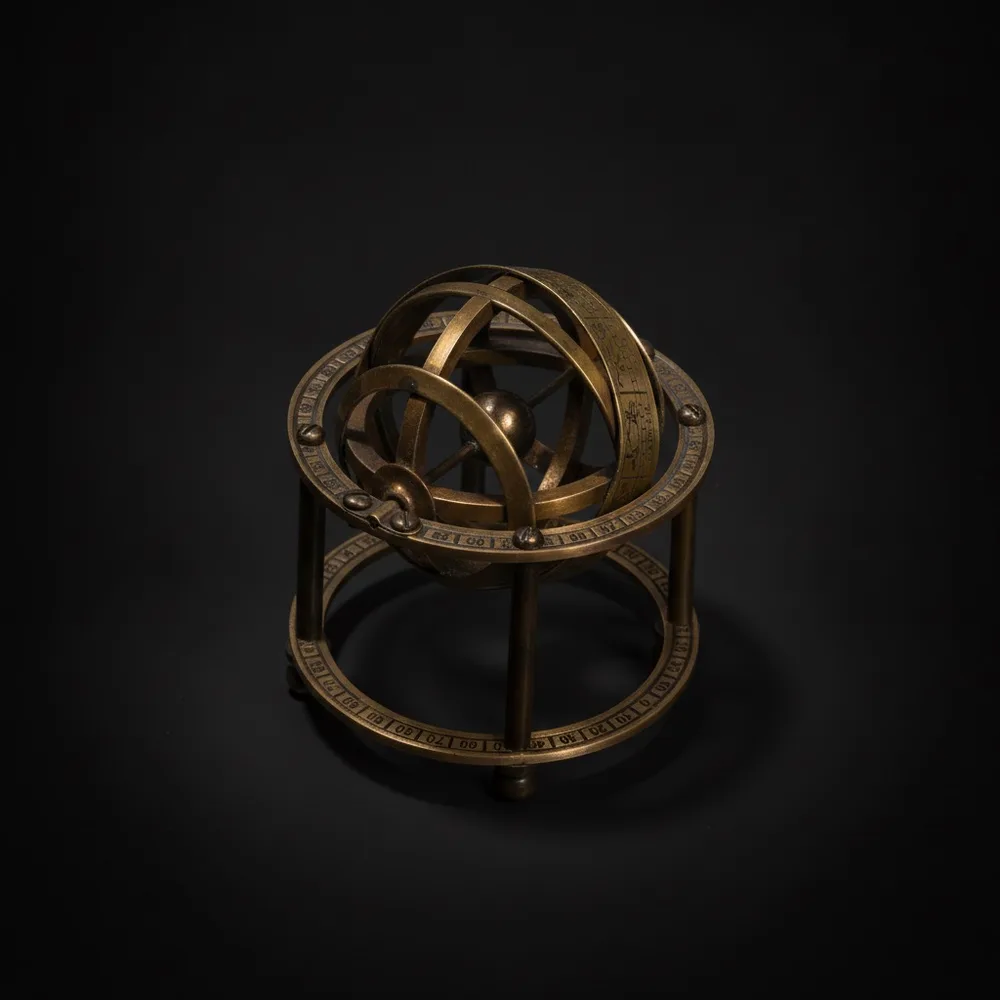
Understand what an armillary sphere represents, how to compare its rings and base, and how to plan a stable, readable display.
Understand what an armillary sphere represents, how to compare its rings and base, and how to plan a stable, readable display.
Compare a ring-based celestial model with an orrery, and learn what each can communicate in a display or teaching setting.
Compare compact binocular forms, focusing, magnification claims and presentation before selecting an optical gift or display.
Compare compass form, dial, case and display, and understand why a moving needle alone does not establish navigation accuracy.
Look at the frame, scale, moving parts and presentation before selecting a sextant-inspired object.
A practical guide to handheld spyglasses and tripod telescopes, from eye-level placement to the questions worth asking before ordering.
Give each compass a distinct gift role instead of filling a shelf with minor finish variations.
Measure a globe’s full footprint, compare desk and floor stands, and plan a location where the map can be seen and safely approached.
Plan an orrery display around footprint, moving-part clearance, viewing distance, access and interpretation.
Compare the interaction, footprint and presentation of a handheld spyglass and a supported telescope before choosing a format.
Compare opera glasses by scale, grip, finish, focus and presentation, with practical checks for retailers and gift buyers.
Choose an orrery by what it models, how it moves, its footprint and viewing distance, with clear limits for educational claims.
Compare pearl, abalone and leather finishes by appearance, case, care and the questions to confirm for each model.
Use the frame, arc, arm and sighting arrangement as a guide to careful description rather than an assumption of navigational accuracy.
Choose a vintage-style globe by map legibility, scale, stand, placement and the needs of its intended reader.
A practical checklist for comparing magnification claims, focusing controls and cases on vintage-style binoculars.