Handheld Spyglass vs Tripod Telescope: Choosing by Viewing and Display Needs
Compare the interaction, footprint and presentation of a handheld spyglass and a supported telescope before choosing a format.
A practical guide to handheld spyglasses and tripod telescopes, from eye-level placement to the questions worth asking before ordering.
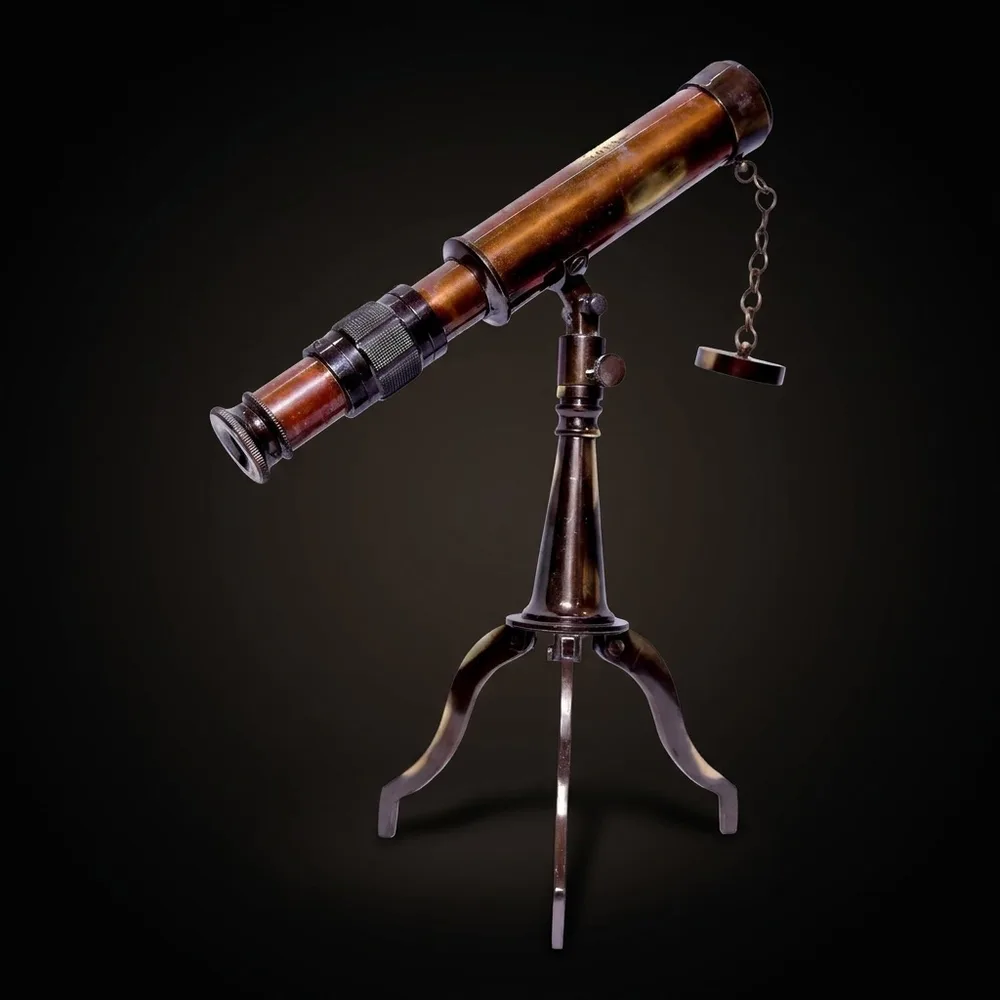
A vintage-style telescope can be a small personal object, a desktop focal point or the anchor of a maritime interior. A useful category guide starts by looking at how the product is constructed and presented, then asks what the owner expects to do with it. “Telescope” and brass-coloured metal do not by themselves establish astronomical performance, period provenance or a complete display set.
Antiqula’s catalogue illustrates several different arrangements: a 10-inch telescope with wooden box and foldable brass tripod (explorex-9-3), an 11-inch single-barrel form on a compact brass tripod without a case (explorex-10-1), and an 18-inch handheld spyglass supplied with a leather case (stellarx-18-1). These references demonstrate different formats and presentation choices. Confirm current listing details and inspect samples before making claims about use or included components.
Look at the barrel first. A single tube presents a straightforward sight line; a double-barrel design has a different silhouette and needs its own product-specific explanation. Draw tubes can change length between storage and use. Ask for the closed and extended measurements and find out how focus is adjusted. Do not equate length, number of tubes or ornate trim with optical quality.
Then examine the support. A compact tabletop tripod, a taller wooden stand and a handheld spyglass each create a different relationship to furniture and to the user. Check whether the support is detachable or foldable and whether those actions are described for the selected model. If a stand is intended for display, stability and safe placement still matter. A tripod shown beside a telescope in a photograph should not be assumed to be included unless the product record says so.
For a desk, consider whether the telescope will sit beside working objects or be given a dedicated space. A wooden presentation box can be part of the visual story, but it adds footprint and height when open. A compact metal tripod gives a different character and may need a small plinth to separate it from the desk surface. Measure the complete arrangement rather than the telescope barrel alone.
For a shelf or cabinet, check the assembled height and clearance above the eyepiece. Deep shadows and patterned wallpaper can make dark metal hard to read; a plain background often reveals the joints and outline. In a larger room, a supported telescope can create a strong line through the display, but measure the legs and tube projection so visitors can pass without catching a sleeve or bag.
| Display role | Features to compare | Questions to settle |
|---|---|---|
| Personal gift | Handheld form, case and storage dimensions | What is included, and how does the instrument close? |
| Desktop object | Support style, footprint and box presentation | Is the stand included, and does it fold or detach? |
| Room feature | Overall height, stand spread and visual contrast | Does the arrangement fit the circulation route? |
| Educational display | Visible components and clear interpretation | Which operation or capability is documented? |
“Vintage-style” describes appearance unless a source establishes age and provenance. Brass finish, a nautical motif or an inscription can suggest a period without proving that the model is an antique or an exact replica of a named historical telescope. Use neutral language: describe the material and finish, and identify the item as a contemporary reproduction when that is what the seller confirms.
Historical telescopes changed in design over time, but a brief product caption should not borrow a famous inventor or expedition as an origin story without evidence. If a motif includes a quotation, maker’s mark or date, verify what it refers to before treating it as an authentic inscription. A display can be evocative without claiming that the object belonged to a navigator or came from a particular century.
Optical use deserves a separate evidence check. Request the exact magnification and objective specifications, focusing method, field of view, instructions and any stated intended use. Ask for a demonstration through the actual unit. A magnification number alone does not certify clarity or suitability for observing distant objects, and the specifications of one model should not be carried over to a similar-looking sibling.
If the product is primarily decorative, explain its instrument-inspired design and leave unverified viewing claims out. If actual observation is central to the purchase, request written model-specific information and evaluate a sample. Never invite a customer to point a telescope at the Sun. Unknown optics do not become safe for solar viewing because they look historic or include dark glass.
Confirm whether the listed set includes a box, case, tripod, fasteners and instructions. Styled photographs can show components sold separately. For floor or desk supports, ask about assembly, packed dimensions and which parts should be removed for shipping. The package should support the barrel without pressing on draw tubes, focus knobs or decorative fittings.
Metal and leather finishes need model-specific care. The Canadian Conservation Institute explains that polishing is abrasive and removes metal; polishing can change surface detail and patina. Dust gently and request supplier guidance before using a metal cleaner, especially on antique-effect or coated surfaces. Store the telescope in its case or packaging if supplied, with the support secured separately where necessary.
A concise label can state the product reference, verified material and finish, support type and confirmed package contents. Add a short sentence about the intended setting—desk, shelf or maritime-themed interior—without turning that suggestion into a promise about performance. If a buyer asks for an optical instrument, provide the substantiated specification separately from the styling copy.
For a wholesale shortlist, record the assembled and stored dimensions, support configuration, finish, case, included parts and open questions for each reference. Request current availability and terms for the selected models. A good telescope display is made from details that can be checked: a form that suits its space, a package that supports it and a description that lets customers know what they are actually choosing.
Catalogue reference: StellarX 10.0. Listed material: Brass.
Check the current product page and ask for model-specific dimensions, packaging and suitability before ordering.
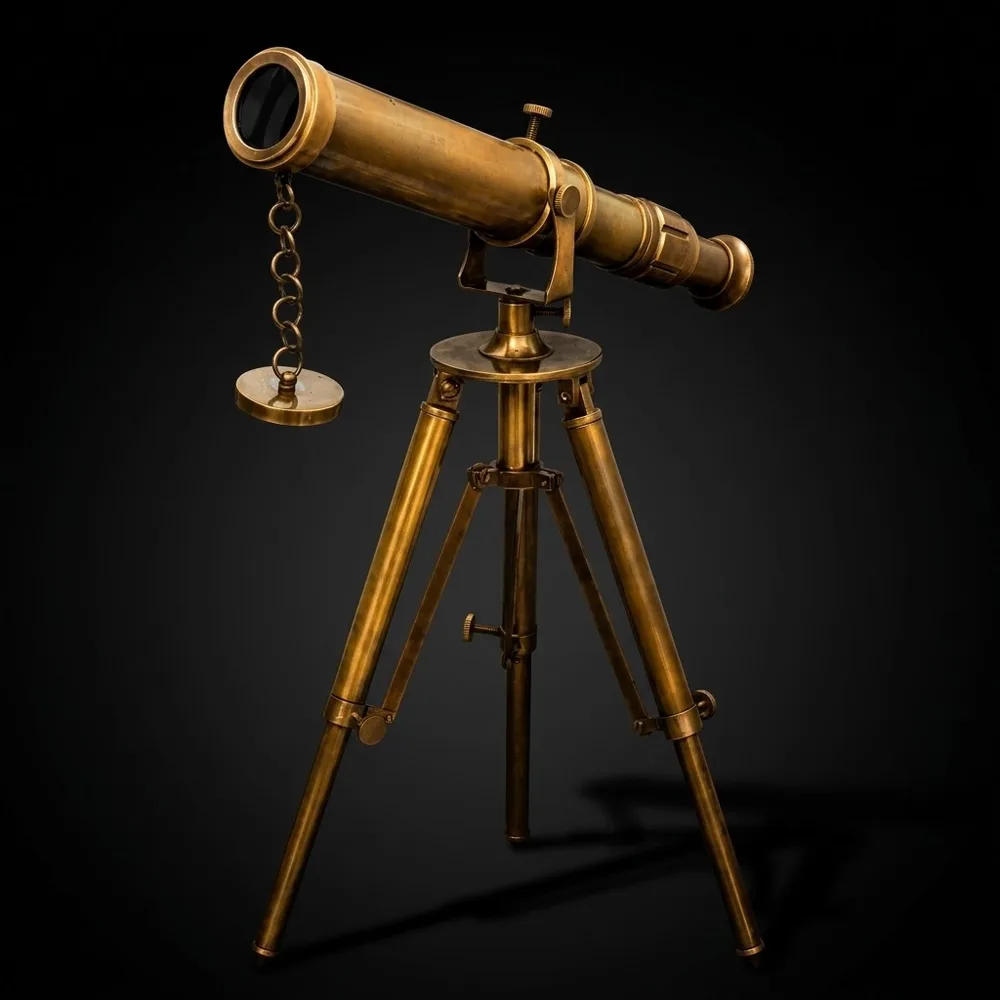
Catalogue reference: StellarX 11.0. Listed material: Brass.
Check the current product page and ask for model-specific dimensions, packaging and suitability before ordering.
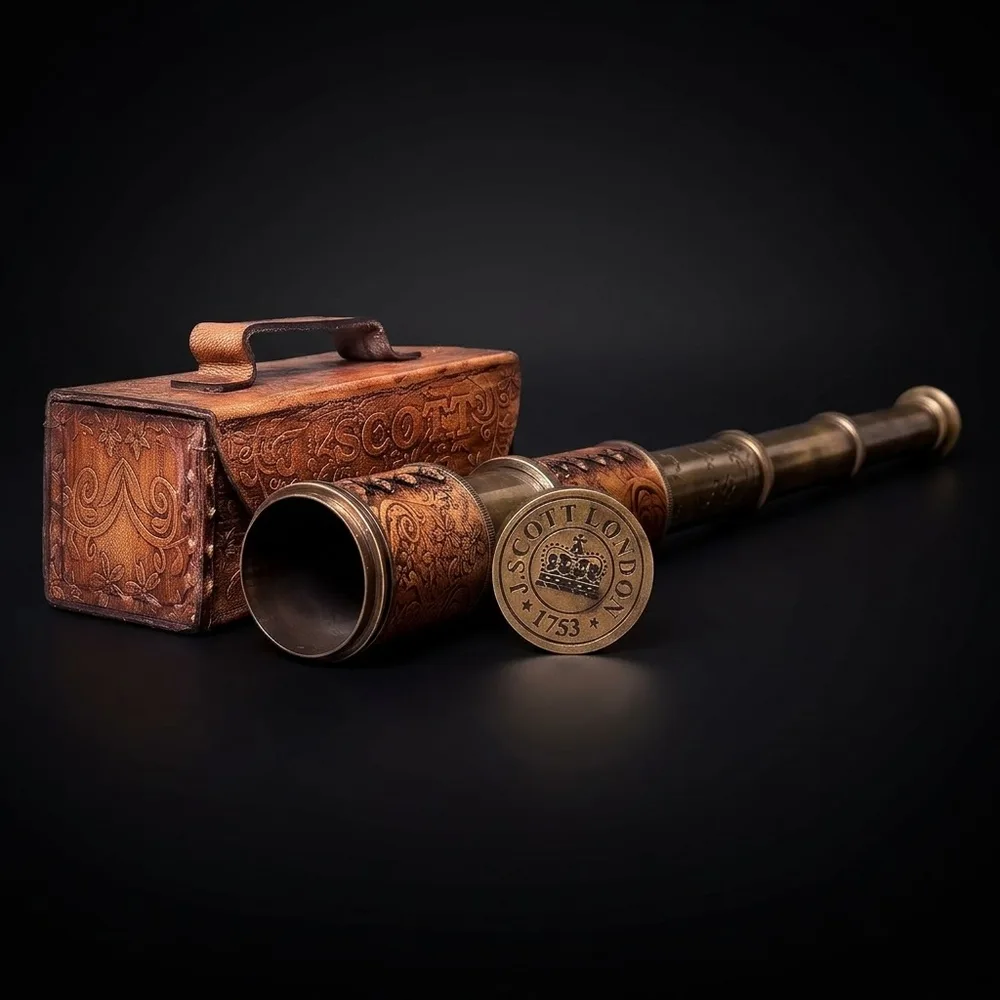
Catalogue reference: ExploreX 18.2. Listed material: Brass & Leather.
Check the current product page and ask for model-specific dimensions, packaging and suitability before ordering.
Explore Antiqula’s telescopes catalogue
Catalogue examples were checked against Antiqula’s product records on 2026-10-02. Research sources provide context; they do not certify the performance of individual catalogue products.