Vintage-Style Binoculars: Magnification, Focusing and Case Selection
A practical checklist for comparing magnification claims, focusing controls and cases on vintage-style binoculars.
Compare compact binocular forms, focusing, magnification claims and presentation before selecting an optical gift or display.
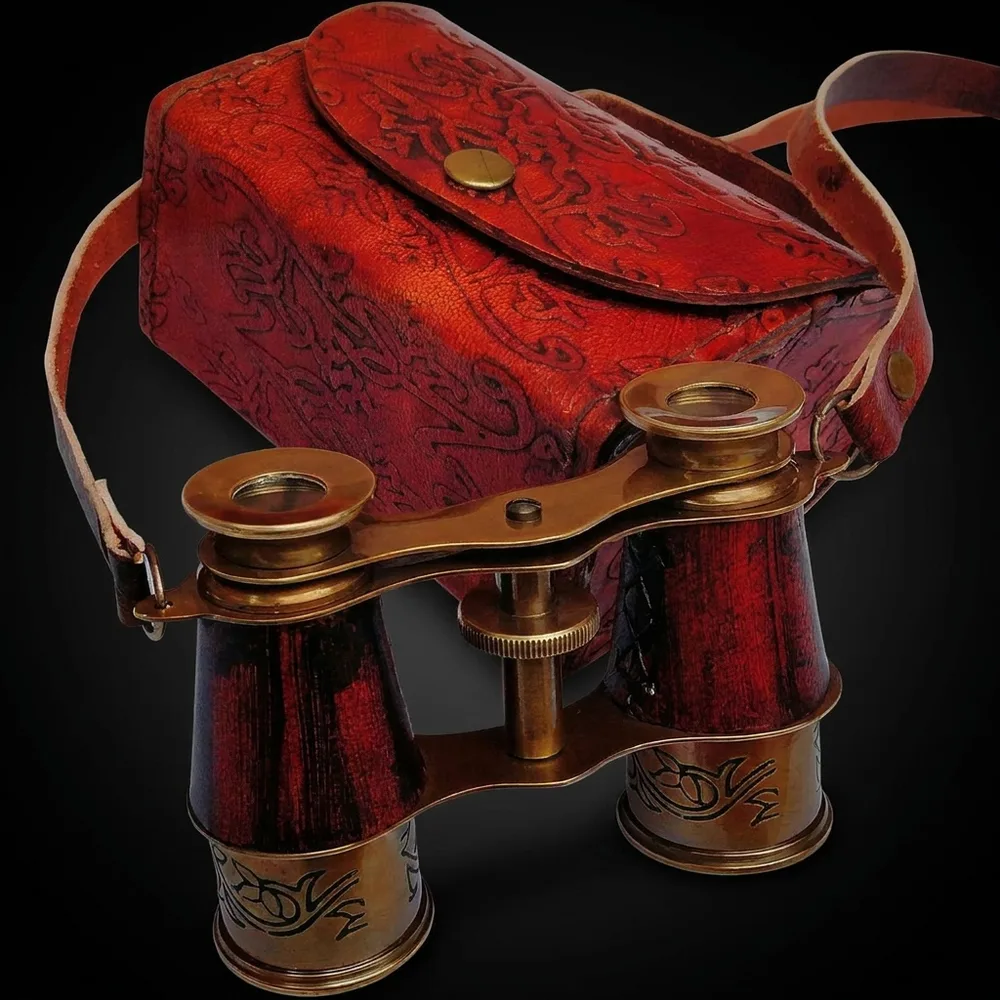
Binoculars are easy to understand at a glance: two optical barrels held together for viewing with both eyes. Choosing a particular pair, however, takes more than deciding whether the finish looks nautical or vintage. Size, grip, focus controls, case, and the evidence behind optical specifications all affect whether an object suits a gift, display or real viewing task.
Antiqula’s catalogue includes compact brass and leather-covered examples, including a Compact Antique Brass Binocular with Red Leather Case (opticx-3-5-0), an intricately detailed marine-style form (opticx-4-0-0) and a red-leather-wrapped model with case (opticx-4-5-0). Use the reference to check the current item page. A product title or historic styling does not establish that an instrument is equivalent to professional field equipment.
For display, silhouette and materials may lead the decision. A compact body is easy to arrange beside maps, books or a globe, while a case can make the set read as a complete gift. For occasional viewing, handling and eye alignment become more important: the user needs to hold the instrument comfortably and bring both eyepieces into position. For a specific activity such as birding or distant landscape observation, request full optical specifications and test the exact model before treating it as suitable.
These use cases overlap, but they should not be collapsed into one vague label such as “functional.” Ask what “functional” means for the product and what test or documentation supports the claim. If the answer is not available, describe the confirmed design features and keep the optical capability unclaimed.
Binocular markings often express magnification and objective-lens diameter as a pair of numbers, such as 8×40. The first number describes how many times larger an object appears in angular terms; the second is the approximate diameter of each objective lens in millimetres. Neither number alone tells a buyer how clear, bright or comfortable the view will be. Lens quality, alignment, field of view, eye relief, coatings and the user’s eyesight also matter.
Ask for the actual marking or documented specification for the exact product reference. Do not infer a number from a product family, visual size or neighbouring model. Higher magnification can also make hand movement more apparent, so it is not automatically an improvement for a small handheld instrument. If a retailer plans to advertise practical viewing, request test conditions, instructions and a sample rather than borrowing specifications from historical optics.
The Science Museum Group’s collection illustrates how diverse binoculars are: its records include Galilean and prismatic designs, compact opera glasses, field glasses and later instruments. That range is useful historical context; a museum record describes its own object and says nothing about the performance of a modern decorative reproduction.
Before recommending binoculars for a real task, check whether the distance between the eyepieces can be adjusted, how focus is changed and whether a dioptre adjustment is present. These controls can make a substantial difference across users. A product photograph may not reveal them. Ask for a close image and an instruction sheet, then confirm the adjustment range and intended user if accessibility or shared use matters.
Try the instrument with the person who will use it when possible. The eyepieces need to sit comfortably, and the body should not be too heavy or awkward for a steady hold. A table or tripod support may help for some kinds of observation, but only if the particular product can accept one. Never assume an included case, strap, stand or removable component unless the listing states it.
Leather wrapping changes grip and visual character; an included case changes storage and presentation. These are related but distinct details. A case that looks coordinated in a styled photograph may not be part of the package. Verify what arrives with the selected reference and whether the case is shaped for that model. If you are buying several variants, compare their accessory lists rather than assuming the same bundle.
| Selection point | Questions for the exact reference |
|---|---|
| Optical information | What magnification, objective diameter, field of view and eye relief are documented? |
| Focusing | What control is present, and do instructions explain it? |
| Fit | Can the eyepiece spacing be adjusted? Is an eye dioptre provided? |
| Handling | What are the dimensions and weight? Is a neck strap included? |
| Presentation | Is the case included, and what material and closure does it have? |
| Intended use | Is the model sold for a verified viewing activity, display or both? |
For a gift shop or themed interior, use a stable shelf with enough room for the object and its case. Position both so the viewer can see the hinge, eyepieces and body detail. Keep the display away from an edge where someone may pick it up by one barrel. A small label can name the product and finish while explaining that the styling references marine or field optics; it need not claim range, clarity or professional use.
If visitors are invited to handle a sample, keep a second piece or product card available for display so the presentation does not become incomplete. Give clear instructions for opening and replacing the case. Avoid sighting through an unfamiliar instrument toward the Sun or intense light. A decorative context is not a substitute for safe-use guidance.
An assortment can vary on meaningful axes: compact versus larger body, plain metal versus wrapped finish, and case included versus separate. Do not stock several visually similar models simply to create a longer list. Write a short comparison card using verified information so the customer understands what changes between references.
For wholesale planning, record the product ID, dimensions, finish, optics stated by the seller, confirmed accessories, sample-test results and open questions. Ask for current stock and trade terms directly. Separating verified optical facts from visual styling gives buyers a credible way to compare products, whether they intend to observe through them or display them as instrument-inspired objects.
Catalogue reference: OpticX 3.3.0. Listed material: Brass & Leather.
Check the current product page and ask for model-specific dimensions, packaging and suitability before ordering.
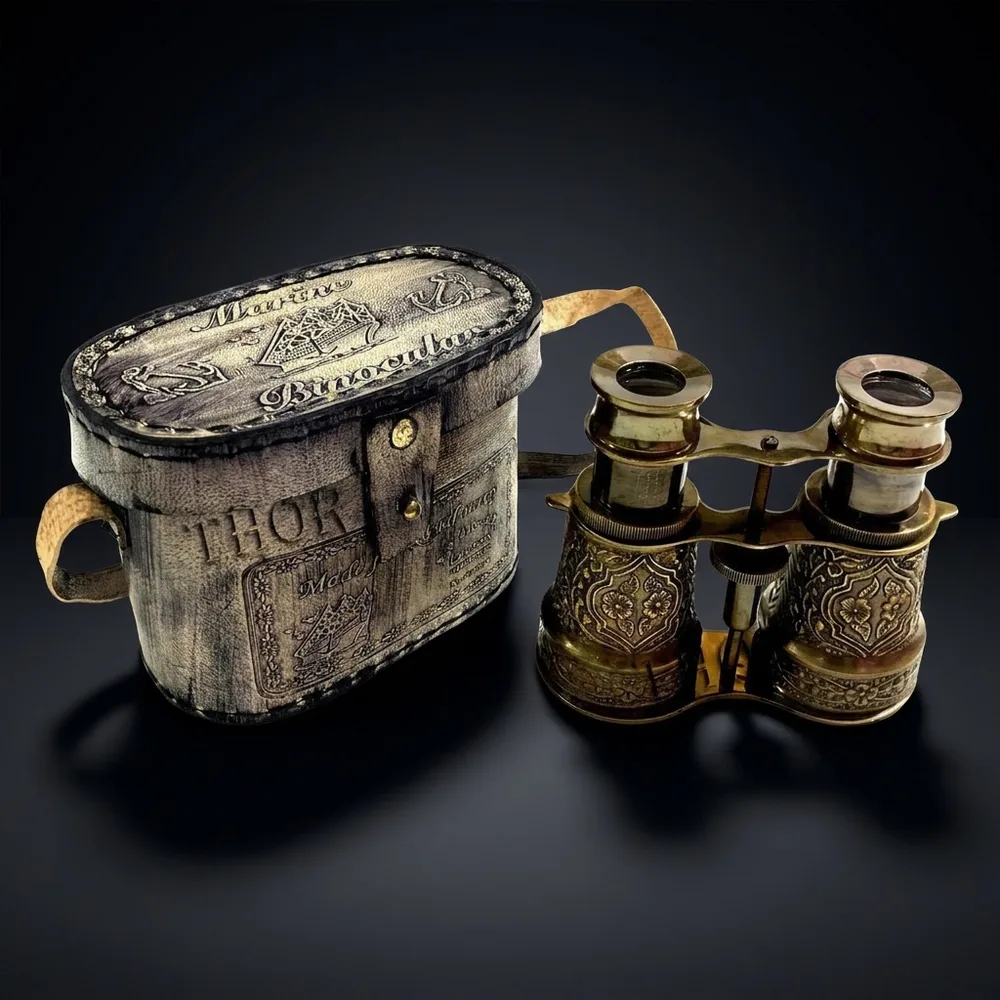
Catalogue reference: OpticX 4.0.0. Listed material: Brass.
Check the current product page and ask for model-specific dimensions, packaging and suitability before ordering.
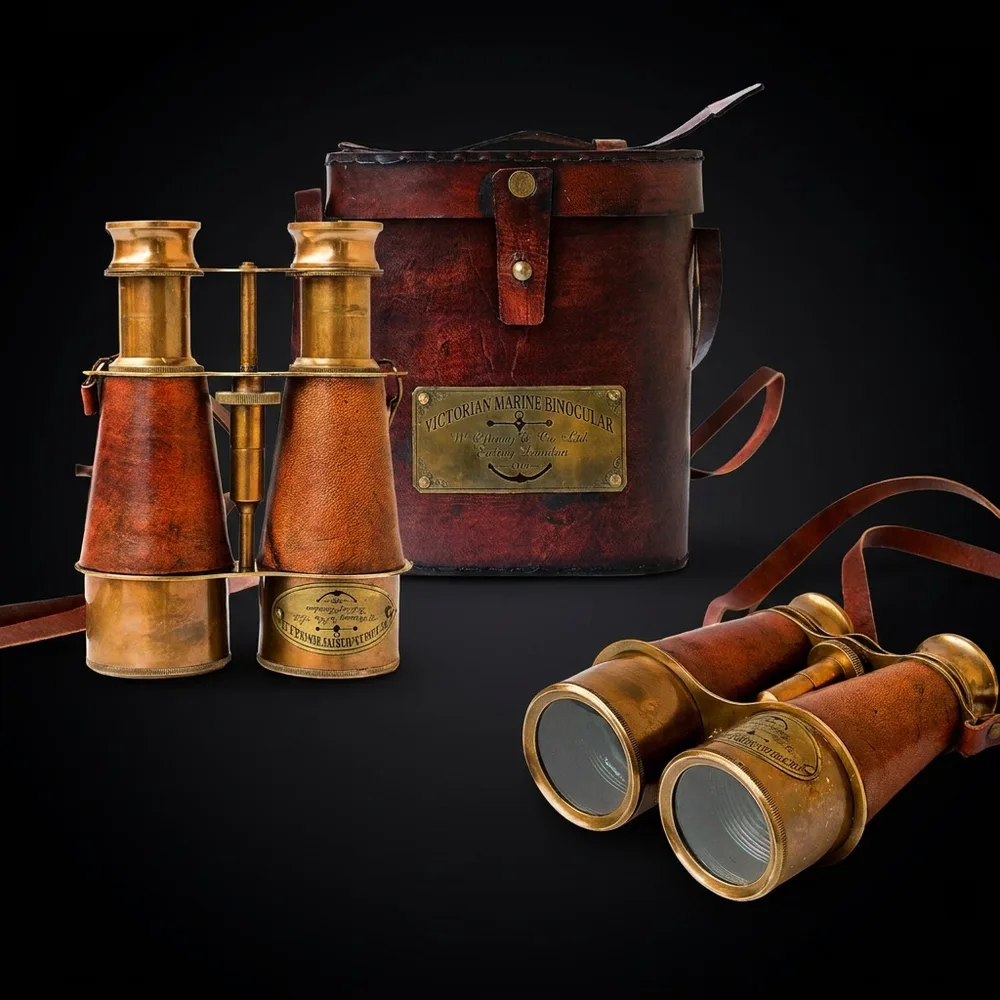
Catalogue reference: OpticX 4.5.0. Listed material: Brass & Leather.
Check the current product page and ask for model-specific dimensions, packaging and suitability before ordering.
Explore Antiqula’s binoculars catalogue
Catalogue examples were checked against Antiqula’s product records on 2026-10-02. Research sources provide context; they do not certify the performance of individual catalogue products.