Opera Glasses: Selection, Uses and Display Guide
Compare opera glasses by scale, grip, finish, focus and presentation, with practical checks for retailers and gift buyers.
Compare pearl, abalone and leather finishes by appearance, case, care and the questions to confirm for each model.
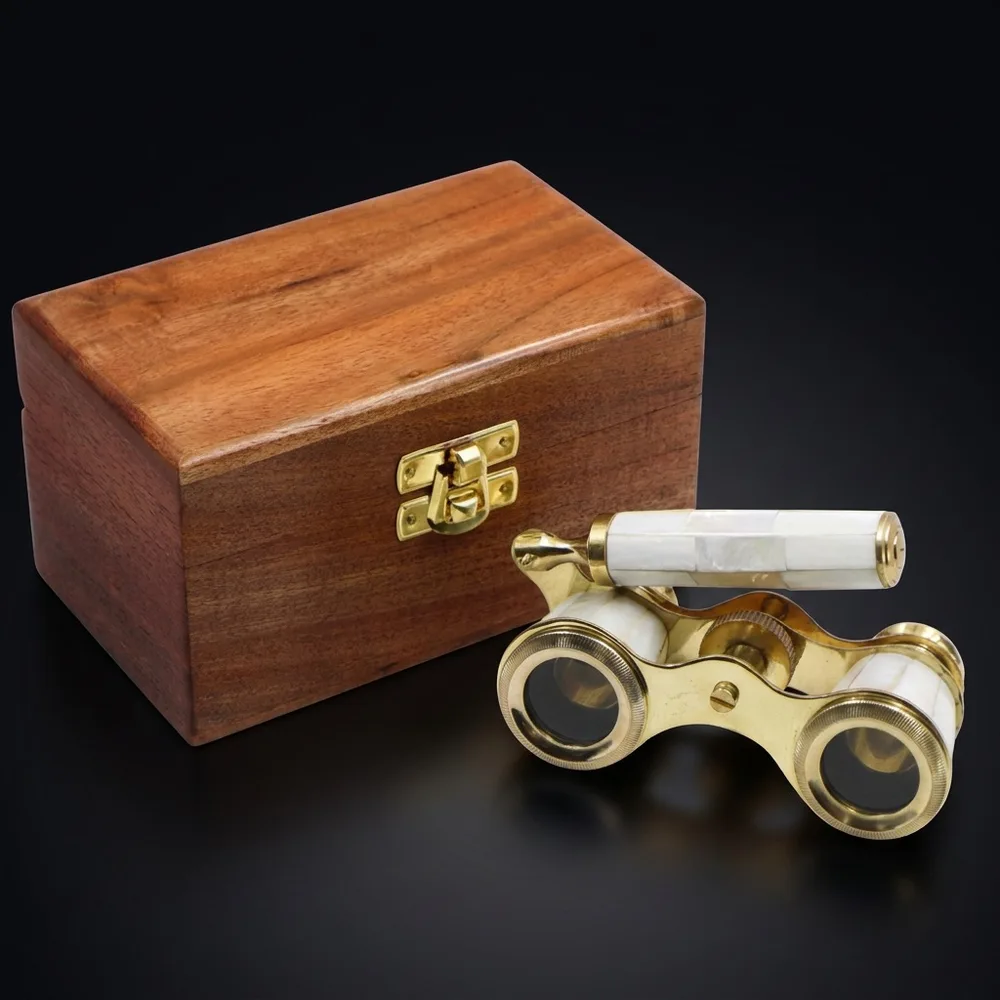
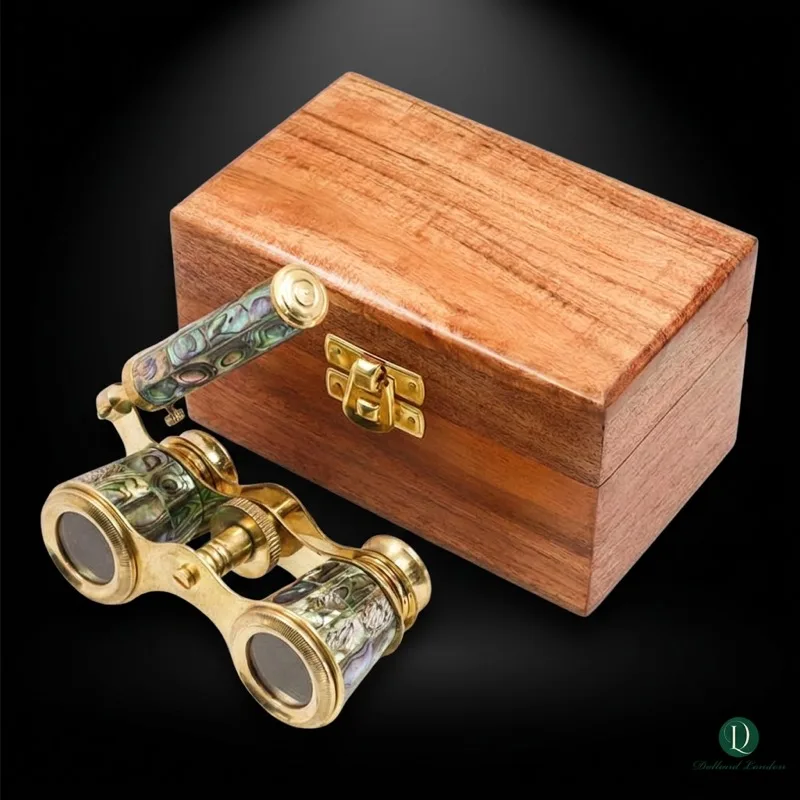
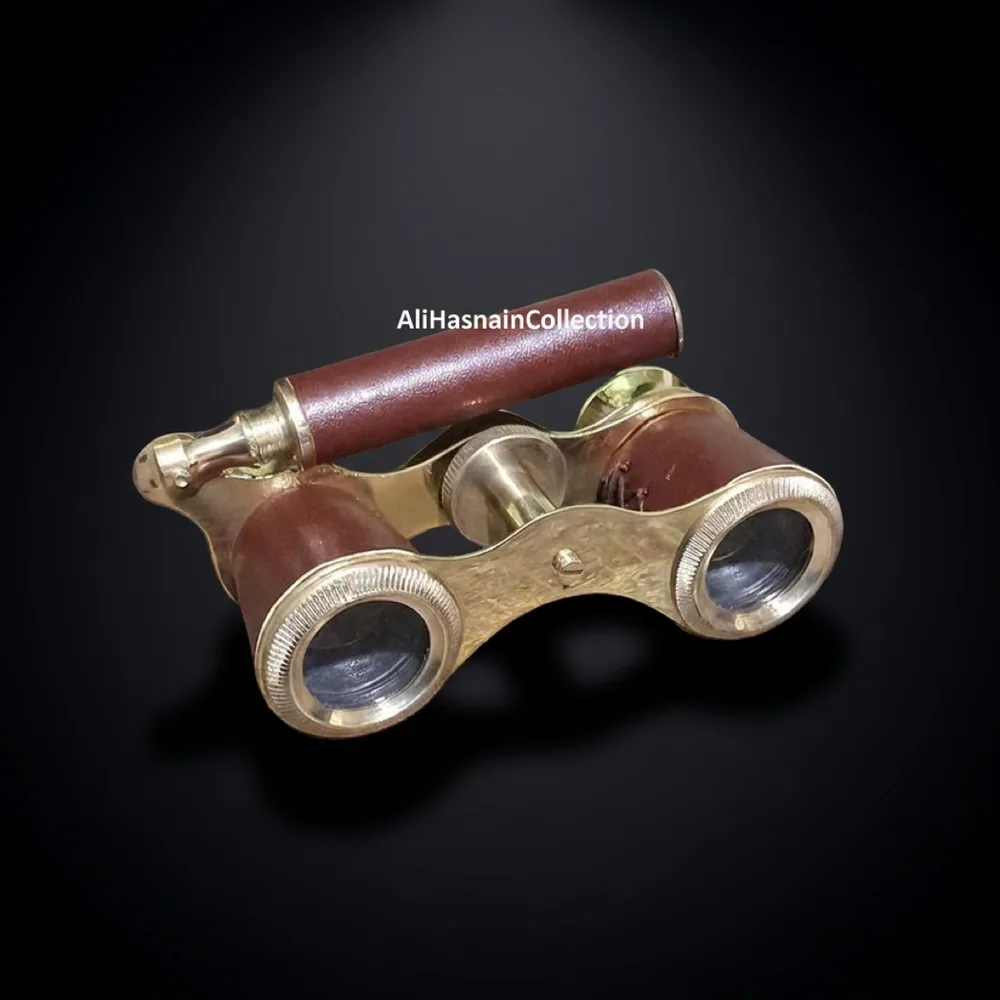
When opera glasses are compared side by side, the finish often makes the first impression. White pearl reads as bright and formal; abalone catches a wider range of shifting colours; leather gives the barrels a quieter, tactile surface. Antiqula’s examples include white pearl with a wooden box (operax-3-1), abalone with a wooden box (operax-3-2) and leather-covered brass (operax-3-3). Those reference names make a useful starting comparison, but the exact listing remains the source for included items and materials.
This is a presentation guide, not an optical ranking. A decorative finish says nothing by itself about magnification, focusing range or image quality. If a buyer plans to use the glasses during a performance, verify those specifications separately and try the sample where possible.
A light pearl surface stands out against brass and can make engraving or barrel contours easier to notice. The contrast tends to work well in a gift box or display cabinet with a restrained background. Ask whether the listing specifies mother-of-pearl, another shell material or a pearl-like finish. Similar colour words can describe different constructions, so avoid making a material promise from a photograph alone.
Reflective surfaces are sensitive to lighting. Use broad, indirect illumination so details show without a sharp white glare. If the pattern varies between pieces, say so and use representative photographs responsibly. Confirm any care guidance for the inlay before proposing a cleaning method.
Abalone is selected for iridescent colour variation; its pattern can shift with angle and lighting. That lively quality can set a piece apart within a collection of brass instruments. It can also make product photography less consistent: a single image may show more blue or green than another sample. For a wholesale assortment, request current photographs or a physical sample and explain if natural variation is expected.
The catalogue’s abalone example is supplied with a wooden presentation box according to its title. Confirm that package at order time and ask whether the box supports the glasses without pressure on the inlay. Do not assume that every abalone model shares the same case or barrel dimensions.
Leather-covered barrels create a tactile surface and reduce the visual emphasis on bright metal. The Antiqula leather-covered example offers a different impression from shell inlay: quieter, more traditional and less reflective. Check the product description for the type and colour of the covering, seams and whether a separate storage case is included. The word leather should not be inferred from a simulated texture or colour.
For care, keep liquids and harsh household cleaners away unless the supplier recommends them. Store the piece dry and protect it from pressure that could mark or crease the covering. If the case is leather too, request guidance for both surfaces; they may need different treatment.
| Finish | Best visual role | Confirm before purchase |
|---|---|---|
| White pearl | Light detail and a formal gift presentation | Exact material, pattern and included box |
| Abalone | Iridescent variation and a distinctive accent | Natural variation, current sample and case |
| Leather | Warm texture and lower-glare appearance | Cover material, seams, care and storage |
A presentation box can be as important as the finish. Check its exterior dimensions, closure, lining and fit. A box that photographs beautifully may take more shelf space than expected. Decide whether the object should be displayed open, closed or alongside a separate information card. If the lid is not designed as a stand, use a stable support rather than balancing the glasses on it.
The Science Museum Group’s historic collection includes opera glasses with mother-of-pearl mounts as well as collapsible and other forms. These records show that decorative materials have long been part of the object’s history. They do not establish that a modern pearl-finished reproduction is made in the same way as a specific historic pair. Cite the museum object for historical context and describe a current product using its own confirmed specification.
For formal gifts, a light shell finish and wooden box may feel ready to present. For a retailer serving buyers who like colour and individual variation, abalone can become the visual feature of a small range. Leather works well where the assortment leans toward maritime, heritage or understated desk accessories. These are merchandising hypotheses; test them with customers rather than presenting them as guaranteed demand.
In all three cases, handling should remain part of the decision. Check weight, focus control, eyepiece spacing and grip with the actual model. A finish should not be allowed to obscure a loose hinge or difficult control. If practical theatre viewing is part of the promise, the seller needs evidence for that use beyond appearance.
Use consistent angles for each variant: front, eyepieces, handle, case interior and scale view. Soft light helps show pearl and abalone without clipping reflections; neutral surroundings make leather tone easier to judge. Keep colour correction restrained and identify a photo as illustrative when it does not show the exact stocked piece.
Write the listing from the reference outward. State verified material and case details, then mention intended gifting or display context. Leave unconfirmed optical claims out. A precise finish comparison is more helpful than calling one option better: customers can decide whether they prefer reflected colour, subtle texture or a clean light surface.
Catalogue reference: OperaX 2.1. Listed material: Brass.
Check the current product page and ask for model-specific dimensions, packaging and suitability before ordering.
Catalogue reference: OperaX 3.2. Listed material: Brass.
Check the current product page and ask for model-specific dimensions, packaging and suitability before ordering.
Catalogue reference: OperaX 3.3. Listed material: Brass.
Check the current product page and ask for model-specific dimensions, packaging and suitability before ordering.
Explore Antiqula’s opera glasses catalogue
Catalogue examples were checked against Antiqula’s product records on 2026-10-02. Research sources provide context; they do not certify the performance of individual catalogue products.