Vintage Globes: Selection, Uses and Display Guide
Choose a vintage-style globe by map legibility, scale, stand, placement and the needs of its intended reader.
Measure a globe’s full footprint, compare desk and floor stands, and plan a location where the map can be seen and safely approached.
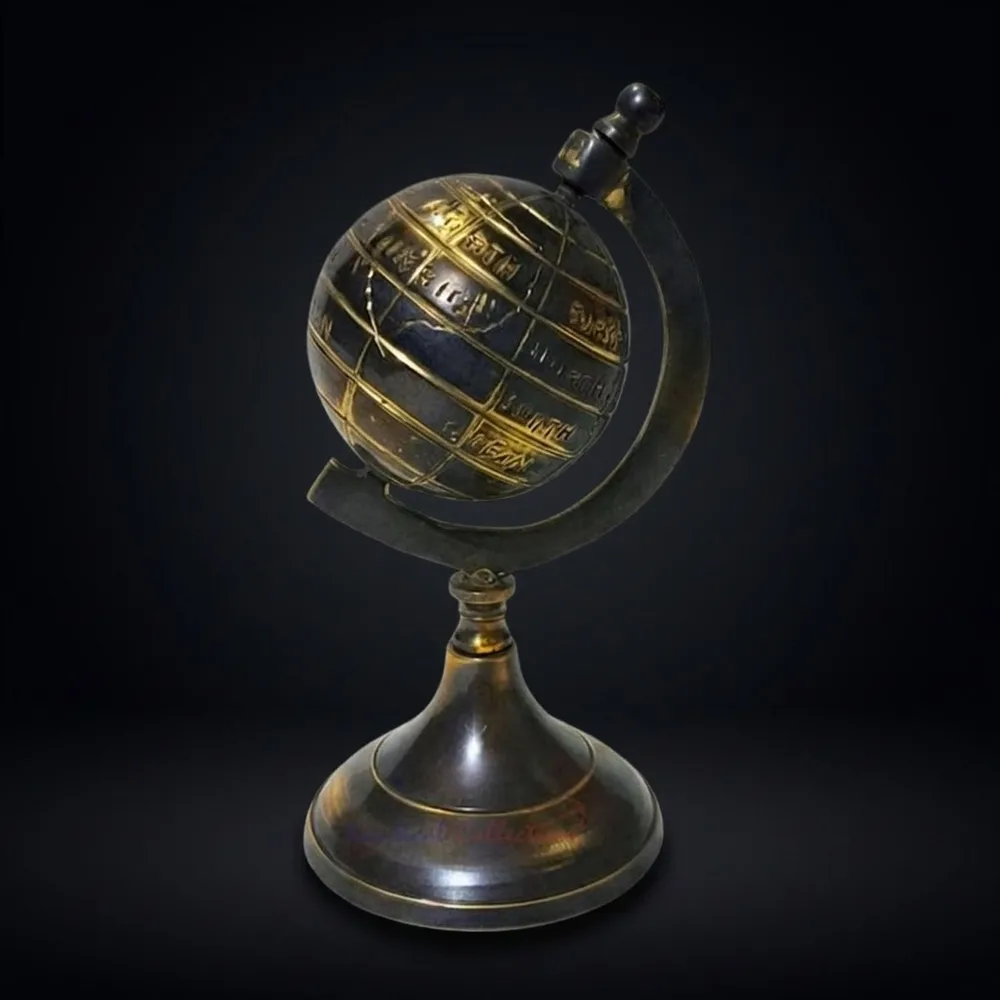
When choosing between a desk globe and a floor globe, start with the viewer’s position. A compact tabletop model asks someone to sit or lean in and read the map nearby. A tripod or pedestal version occupies the room and can be approached while standing. The sphere diameter matters, but the stand, clearance and route around the object often determine whether it feels right in practice.
Antiqula’s range includes small desk forms such as atlasx-6-7-0, a larger three-legged brass stand model atlasx-8-3-0 and tall tripod models such as geox-18-1-0. Confirm current dimensions and stand details on each listing. Product titles are a useful filter; measurements should decide whether the piece fits your space.
For a desk globe, measure the available depth and width, then leave room for the base and any ring that projects beyond it. If the sphere is designed to rotate, allow hand clearance around its widest point. Check assembled height against shelves, lamps and display cabinets. A small sphere on an ornate stand may need more vertical clearance than its diameter suggests.
For a floor globe, measure sphere diameter, total height and the widest spread of the tripod legs or pedestal. The leg spread is the footprint that affects circulation. Mark it on the floor with removable tape before ordering. Check the route through doorways and hallways if the stand arrives assembled or in a large carton. Ask whether assembly is required and what tools or assistance are recommended.
| Question | Desk globe | Floor globe |
|---|---|---|
| Where does it sit? | Desk, shelf, side table or cabinet | Clear floor area with room to walk around |
| Who reads it? | Seated viewer or someone leaning in | Standing viewer or small group |
| What competes for space? | Papers, books and nearby objects | Chairs, doors, curtains and walking routes |
| What needs checking? | Surface depth, shelf height, rotation clearance | Total height, leg spread, assembly and stability |
Map legibility is a separate issue from sphere size. A large globe can still be difficult to read if labels are low contrast or the room is dim. A small globe may be perfectly suitable as decor but not as a reference for a group. Check a close photograph of the printed map and decide whether its purpose is lookup, conversation or visual atmosphere.
A desk base should sit flat without overhang. Some models use a meridian ring or support structure around the sphere; inspect the contact points and avoid assuming the ring rotates or measures anything unless the product information confirms it. For a floor stand, check how the legs meet the floor and whether the height is fixed or adjustable. If height adjustment is listed, ask for the range and locking method.
Place floor models away from the main path through a room. A tripod may visually suggest a small footprint, but its legs can extend into a walkway. Keep it clear of chair wheels, children’s play areas and doors. If the globe is intended for hands-on use, consider whether a person can turn it without pulling on the stand. Follow the supplied assembly instructions and seek supplier guidance if a component does not fit.
A desk globe can be angled toward the chair or placed where a visitor can reach it without stretching across a work surface. Avoid locating it behind a computer monitor or under a low shelf. A floor model can serve as a room’s focal point, but it should be illuminated evenly enough that labels remain visible. Glossy surfaces may reflect a bright window or lamp; test the viewing angle at different times of day.
The Royal Museums Greenwich collection includes terrestrial table globes, while its Maps, Charts and Globes school session explores how these sources can inform readers and how navigation has changed. That suggests a practical rule: decide whether the object is to be studied as a map or appreciated as a sculptural form. If map reading matters, check labels at the actual viewing distance instead of judging only from a promotional image.
Packaging dimensions can exceed the assembled footprint. Request carton measurements for a floor globe and check whether it can be carried up stairs or through the planned route. Confirm which parts are removable and whether the box protects the sphere and stand separately. Keep assembly pieces together and retain the instructions for future moves.
For everyday care, use the method recommended for the map surface and stand finish. Avoid cleaning fluids on printed labels unless the supplier says they are safe. A tabletop globe may be easier to move for dusting, but should be lifted by its base rather than the sphere or a thin ring. Do not reposition a tall floor model by pulling its top; move it according to the instructions and with enough help for its size.
Select a desk globe when the surface is stable, the map can be approached and the complete base fits without crowding other work. Choose a floor format when there is a clear corner, enough circulation and a viewer can see the sphere comfortably while standing. In either case, compare the map, stand, height and footprint together.
A quick room plan can prevent a beautiful globe from becoming an obstacle. List the exact reference, assembled measurements, route into the room and intended viewer. Then confirm current availability and any package details with the seller. That small preparation turns “Will this fit?” into a question with a dependable answer.
Catalogue reference: AtlasX 2.5.0.
Check the current product page and ask for model-specific dimensions, packaging and suitability before ordering.
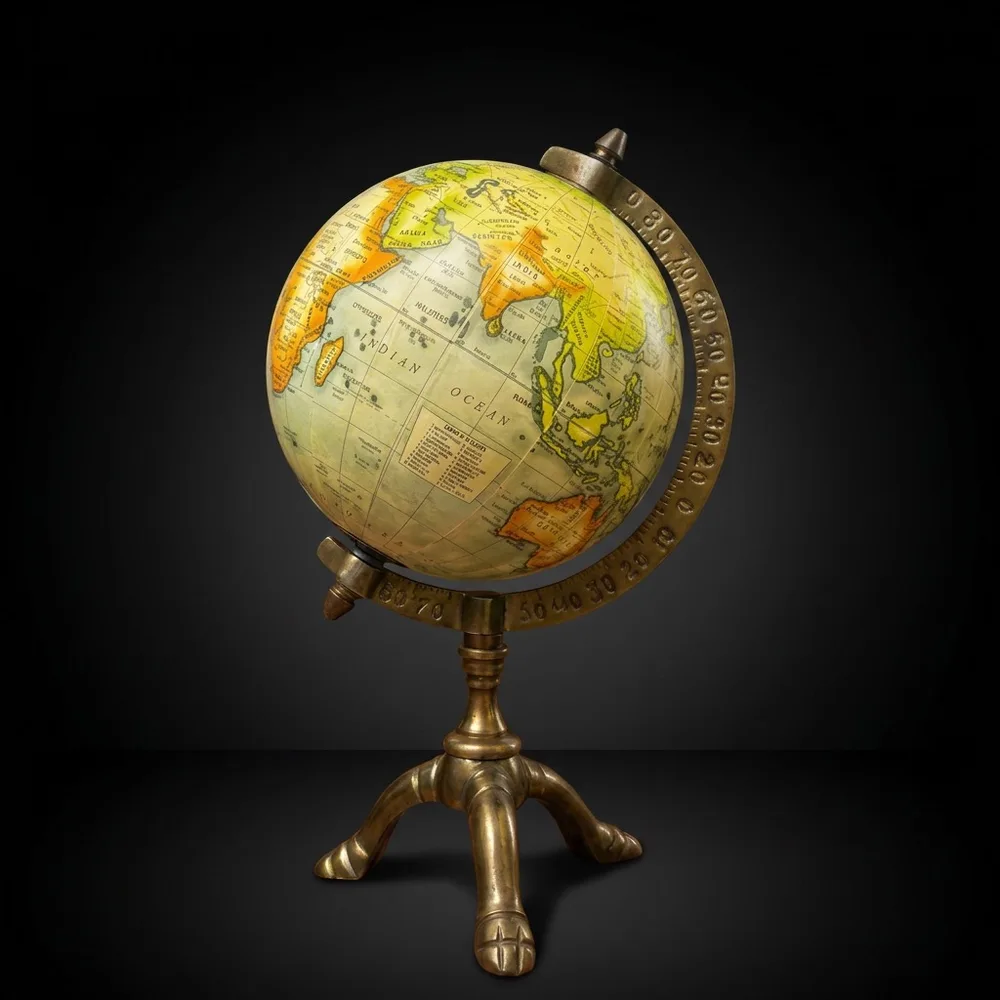
Catalogue reference: AtlasX 8.2.
Check the current product page and ask for model-specific dimensions, packaging and suitability before ordering.
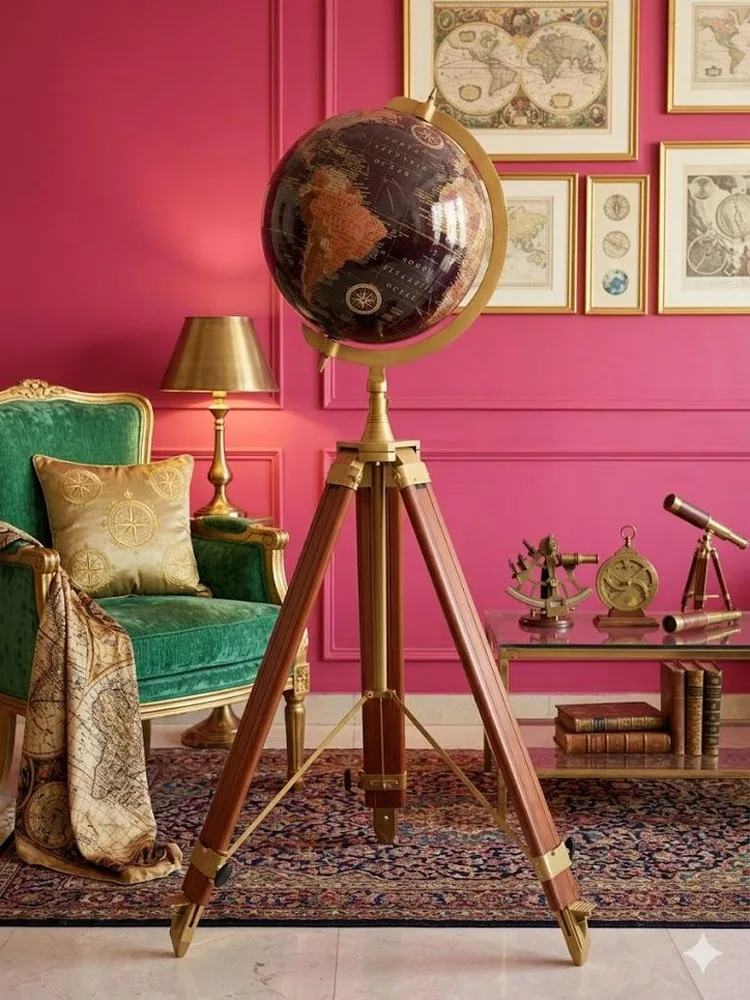
Catalogue reference: GeoX 18.3.
Check the current product page and ask for model-specific dimensions, packaging and suitability before ordering.
Explore Antiqula’s vintage globes catalogue
Catalogue examples were checked against Antiqula’s product records on 2026-10-02. Research sources provide context; they do not certify the performance of individual catalogue products.