Binoculars: Selection, Uses and Display Guide
Compare compact binocular forms, focusing, magnification claims and presentation before selecting an optical gift or display.
A practical checklist for comparing magnification claims, focusing controls and cases on vintage-style binoculars.
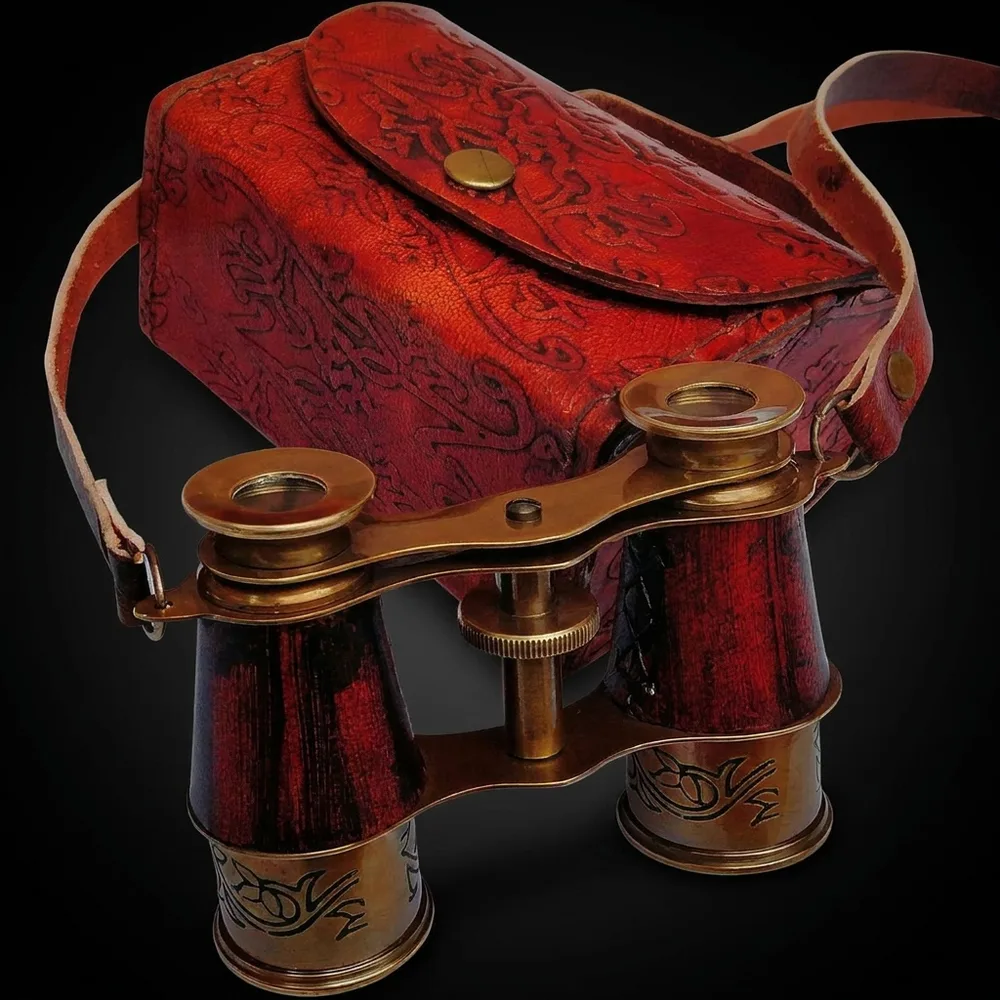
Vintage-style binoculars sit between optical instrument and presentation object. Brass, leather and a fitted case can make a memorable gift, but none of those finishes tells you how the view performs. To compare models responsibly, separate three questions: what optical specifications are documented, how the user focuses and fits the instrument, and what accessories are actually included.
Antiqula’s category offers different treatments, including a compact red-leather-cased binocular (opticx-3-5-0), a red-leather-wrapped marine-style model (opticx-4-5-0) and a mother-of-pearl variant with a white case (opticx-5-0-9). Check each live product record for current specifications and package contents. Similar styling does not mean identical optics or accessories.
Magnification describes apparent angular enlargement. It does not certify resolution, brightness, field of view or suitability for a particular activity. If the seller lists a figure, record it against the product ID and ask whether it comes from tested documentation for that model. Do not transfer the number from a sibling item or infer it from the physical size of the barrel.
Magnification is only one part of a viewing experience. A well-aligned lower-power instrument may be easier to hold steady than a higher-power one. The objective-lens diameter, glass, coatings, field of view and eye relief also shape what a user sees. Ask for the complete specification rather than treating a single number as a quality ranking.
Historical labels need equal care. The Science Museum Group catalogue documents many types of binoculars and opera glasses across different periods. That history helps explain why “field glass,” “Galilean” and “prismatic” appear in instrument descriptions; it does not validate a contemporary product just because its body resembles a period object.
Find out how the focus is adjusted. Some instruments have a central wheel; others may focus by turning eyepieces or use another arrangement. Ask for a close view of the controls and the instructions supplied with the exact reference. If the instrument will be shared, check interpupillary adjustment—the spacing between eyepieces—and whether a dioptre control compensates for differences between the viewer’s eyes.
Try the binoculars with the intended user when practical. The eyepieces should align comfortably, the body should be controllable in the hands, and the focus should be easy to reach. If you cannot test a sample, avoid promising that a model suits all ages, eyesight conditions or outdoor scenarios. These are fit questions, not simply finish preferences.
A fitted case can protect a small instrument from ordinary contact and helps make a gift package feel complete. Confirm that the case is included, closes securely and fits the selected binocular. Check whether a strap, belt or other accessory appears in the listing. A staged image may show props or pieces that are not part of the product.
| Case question | Why it matters |
|---|---|
| Is it included with this reference? | Related products may have different bundles |
| Does the binocular fit without force? | Tight packing can put pressure on controls or barrels |
| What closes the case? | A closure affects storage and repeated retail handling |
| Is a strap or belt included? | Photographs can make separate accessories look bundled |
| How should it be cleaned? | Leather and coated surfaces need finish-specific care |
For a wholesale sample, inspect both the instrument and case when they arrive. Check the hinge, focus mechanism, alignment and closure gently, following the supplier’s instructions. Keep packaging until the sample review is complete so any concern can be described against the original reference and shipment.
If the buyer values visual character, describe the material and form: compact brass body, leather wrap, decorative surface or coordinated case, where those facts are stated for the product. If the buyer expects practical viewing, request substantiated specifications and test the sample. The same item might satisfy both interests, but the evidence should support each claim separately.
For a display, choose a stable surface and position the case open only if it stays secure. A small label can say that the piece is vintage-style and identify the finish, while making no claim of antique age or professional optical grade. Keep any demonstration away from direct sunlight and do not encourage visitors to use an unknown lens system to view bright sources.
Make a shortlist with one line per reference: magnification and objective size as documented, focusing method, eyepiece adjustment, dimensions, finish, case and included accessories. Mark unknown fields as unconfirmed. That format makes two models easier to compare than broad labels such as “classic” or “premium,” and it gives a supplier a precise basis for answering a wholesale enquiry.
The case and brass may catch attention first, but dependable selection comes from checking what the exact binocular can do and how it is supplied. Treat historic inspiration as visual context, and let verified product information carry any statement about use.
Catalogue reference: OpticX 3.3.0. Listed material: Brass & Leather.
Check the current product page and ask for model-specific dimensions, packaging and suitability before ordering.
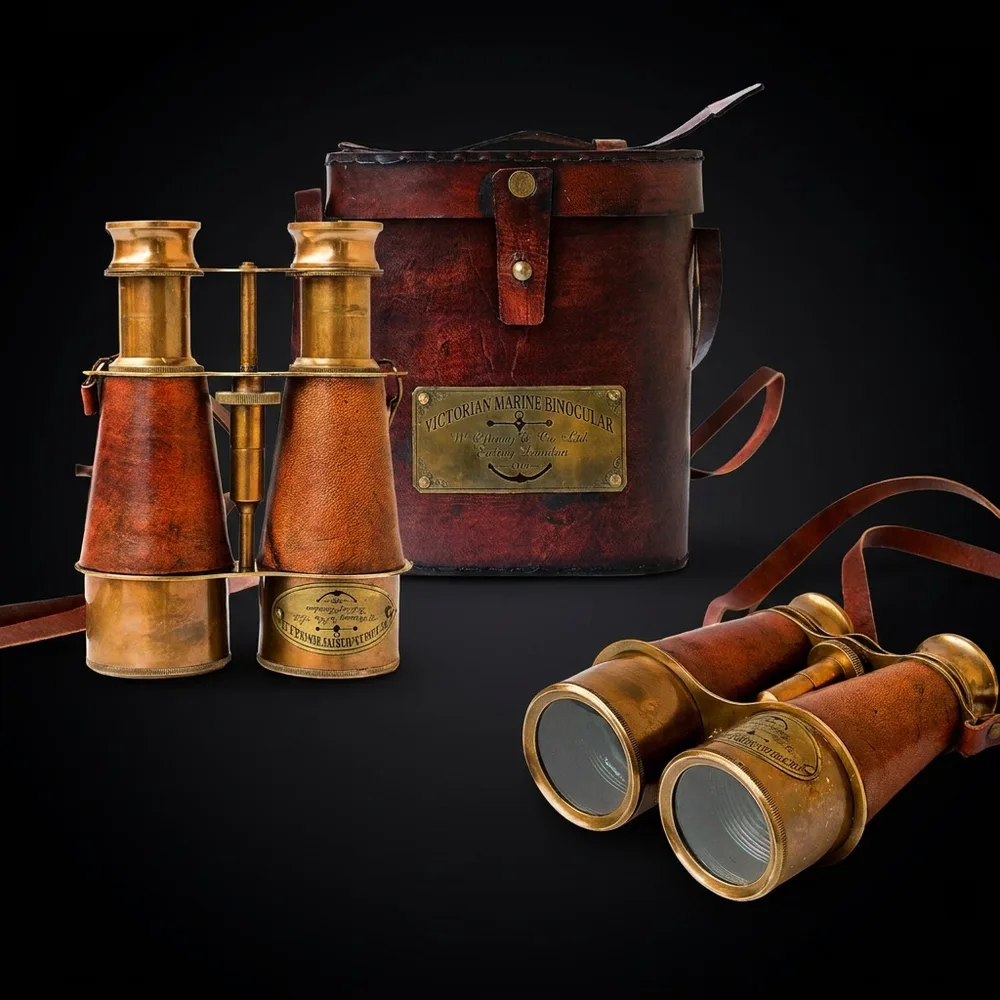
Catalogue reference: OpticX 4.5.0. Listed material: Brass & Leather.
Check the current product page and ask for model-specific dimensions, packaging and suitability before ordering.
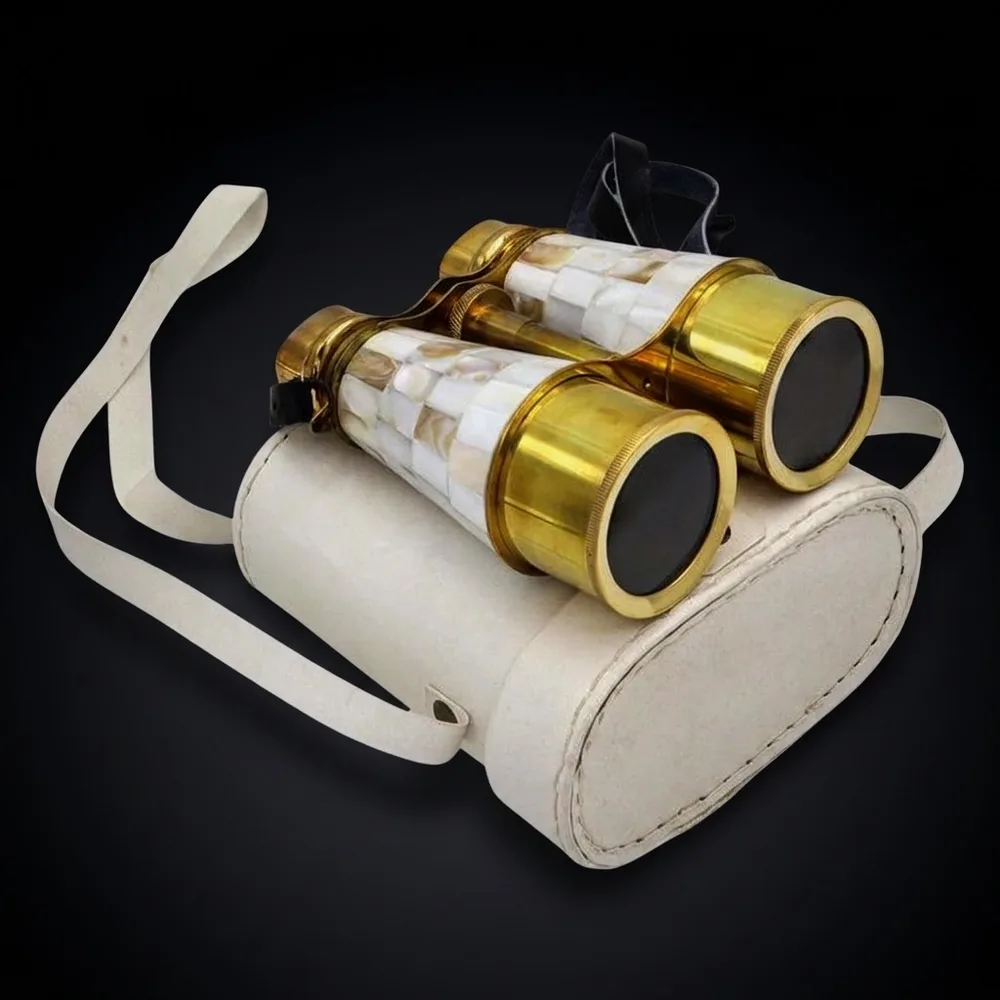
Catalogue reference: OpticX 5.0.9. Listed material: Brass & Mother-of-Pearl.
Check the current product page and ask for model-specific dimensions, packaging and suitability before ordering.
Explore Antiqula’s binoculars catalogue
Catalogue examples were checked against Antiqula’s product records on 2026-10-02. Research sources provide context; they do not certify the performance of individual catalogue products.