Pearl, Abalone and Leather Opera Glasses: Comparing Presentation Styles
Compare pearl, abalone and leather finishes by appearance, case, care and the questions to confirm for each model.
Compare opera glasses by scale, grip, finish, focus and presentation, with practical checks for retailers and gift buyers.
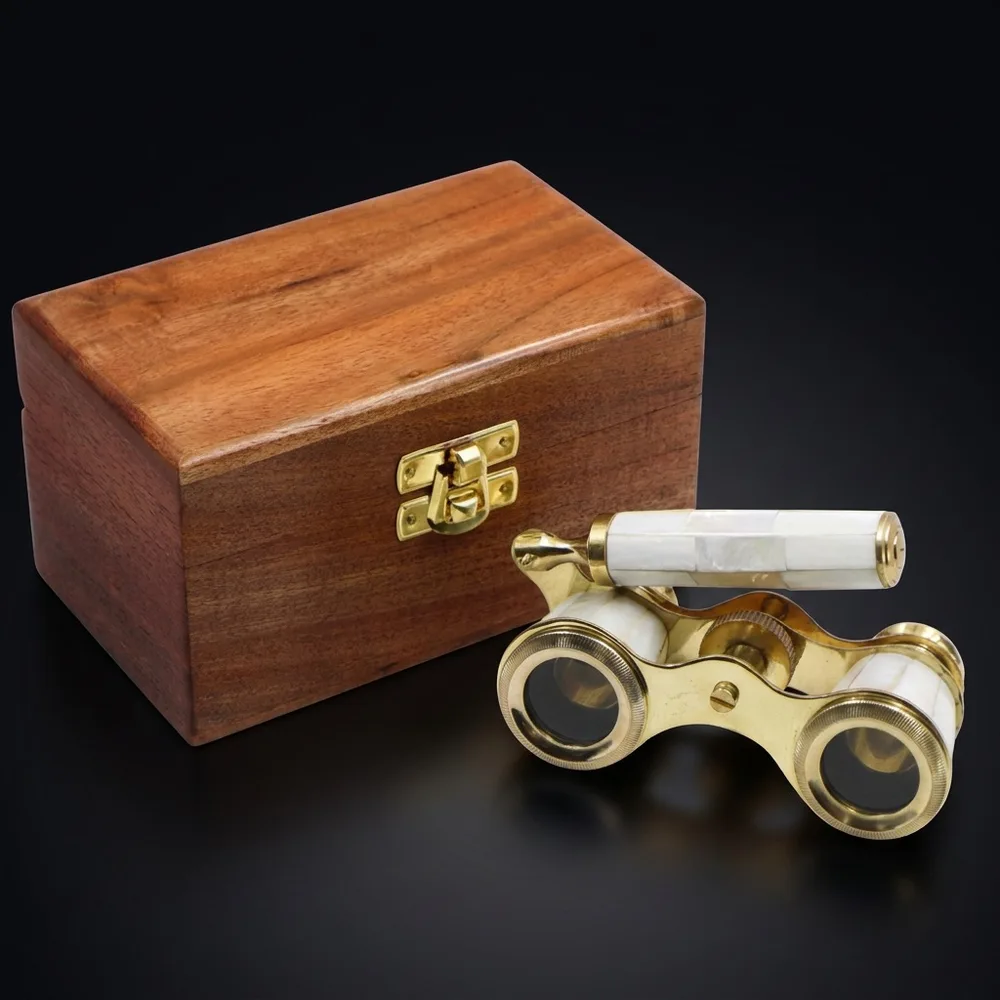
Opera glasses are compact binoculars associated with viewing a performance from a seat in a theatre or concert hall. Their small scale and decorative surfaces make them natural gift and display objects, but a buyer still needs to compare grip, focus, finish and case. The word “opera” describes a traditional setting; it does not prove that every modern reproduction has the same optical specification or is comfortable for every audience member.
Antiqula’s catalogue offers multiple presentations, including white pearl in a wooden box (operax-3-1), abalone in a wooden box (operax-3-2) and a leather-covered barrel (operax-3-3). Compare the exact product pages for dimensions, focusing controls, magnification and accessories. The following checklist helps keep the display story distinct from any unverified performance promise.
Opera glasses are generally used at arm’s length or held close to the face for short periods. The handle or bridge affects how naturally the user can keep the object steady. Ask how the model is gripped and whether the handle folds or detaches. Check the instrument’s weight and balance if the information is available. An ornamental handle may change the presentation, but should not be assumed to provide a secure grip until tried.
The distance between the eyepieces also matters. If the spacing cannot be adjusted, the glasses may not suit every user. Check for a focus wheel or other focusing arrangement and whether instructions are included. A quick sample test can reveal more than a styled photograph: can the user find the control, bring the two images together and focus on a distant object without strain?
Magnification indicates apparent enlargement, not overall image quality. Ask for model-specific documentation covering magnification, objective-lens size, focus and any stated field of view. Avoid carrying specifications from one finish to another without confirmation. If the manufacturer does not publish these details, explain the product’s visible design and intended decorative context without inventing numbers.
Historic instruments varied considerably. The Science Museum Group holds opera glasses dated across the nineteenth and twentieth centuries, including collapsible designs and examples with decorated mounts. Its record for a six-draw pair describes a particular British object made between 1800 and 1899. It is a useful example of the category’s historical variety, not evidence that a modern product shares that construction or age.
Pearl and shell inlays create changing highlights as the object moves. A plain brass surface gives a quieter and more continuous appearance. Leather-covered barrels introduce texture and can make the glasses feel warmer in the hand. Each option suits a different visual story, but the exact material should be taken from the product record, not guessed from colour in a photograph.
Shell names also deserve precision. “Mother-of-pearl” and “abalone” refer to distinct material descriptions, while “pearl finish” might be used loosely in retail copy. Use the language on the confirmed product listing and ask the supplier if a material distinction affects sourcing or care. Do not promise that two similarly named variants have identical patterning: natural material can vary, and photographs may be representative.
| Presentation style | Visual character | Check before ordering |
|---|---|---|
| White pearl or shell | Light, reflective detail against metal | Exact material, pattern variation and care |
| Abalone | Iridescent colour variation | Whether each piece differs and how it is protected |
| Leather-covered | Textured, restrained and tactile | Finish, seams, care and whether a case is included |
| Plain brass | Strong emphasis on form and metalwork | Surface finish, patina and polishing guidance |
A wooden box provides a defined gift presentation and a place to return the glasses after use. A soft case may take less room, while no case may mean the object is best treated as display stock. Verify what is actually included, how the item is supported inside and whether there is enough clearance for a folding handle. Confirm the outer package dimensions if a gift retailer needs to plan shelf or shipping space.
Open boxes can improve visibility but occupy more shelf depth and invite handling. Keep the object secure when the lid is raised, and do not use the case lid as a stand unless its stability is clear. For a shop display, show the glasses and case together while leaving a labelled sample available for supervised handling if the business chooses to offer one.
For a theatre-themed shop, pair opera glasses with a simple explanation of their traditional audience use. In a dressing room or study, focus on the decorative finish and box. In an educational display, show how compact refracting optics differ from larger field binoculars, but use a diagram or verified museum information for the historical explanation. A product should not be presented as an antique solely because its finish appears aged.
If the model will be used during a performance, consider comfort, focusing and venue etiquette. A customer may need to hold it for an extended interval or pass it to another person. Ask whether instructions explain the controls and whether the adjustment suits shared use. If those answers are unavailable, position the model as a gift or display piece rather than promising universal practical suitability.
Photograph pearl, abalone and polished metal in soft, indirect light so texture and colour remain visible without blown highlights. Include a scale reference and separate images of any included case. Be honest where the photographed item is one example of a variable natural pattern. Do not over-edit colour: buyers need a fair sense of the material they may receive.
Use the supplier’s care guidance for shell, leather and metal finishes. Avoid harsh cleaners or abrasive polishing on a decorative surface unless the maker explicitly recommends them. Keep a retail sample in its case when not on display, and handle the barrels rather than delicate inlay or a folding handle.
For every reference, record the verified optical specifications, focus arrangement, handle style, overall dimensions, materials, case and package contents. Keep confirmed use separate from styling language. When stock is intended for wholesale, ask for a sample of each materially different finish and review it under the lighting where it will be sold.
Opera glasses can feel special because they are small, personal objects with a clear performance association. Careful selection preserves that charm: choose a comfortable form, describe the finish accurately and let verified details—not period styling alone—support any claim about viewing.
Catalogue reference: OperaX 2.1. Listed material: Brass.
Check the current product page and ask for model-specific dimensions, packaging and suitability before ordering.
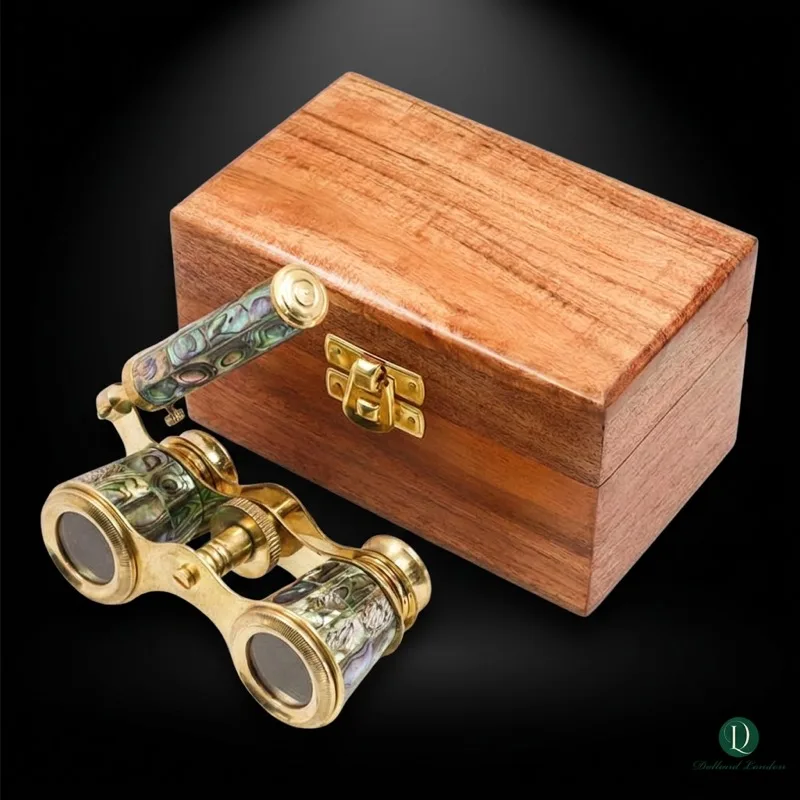
Catalogue reference: OperaX 3.2. Listed material: Brass.
Check the current product page and ask for model-specific dimensions, packaging and suitability before ordering.
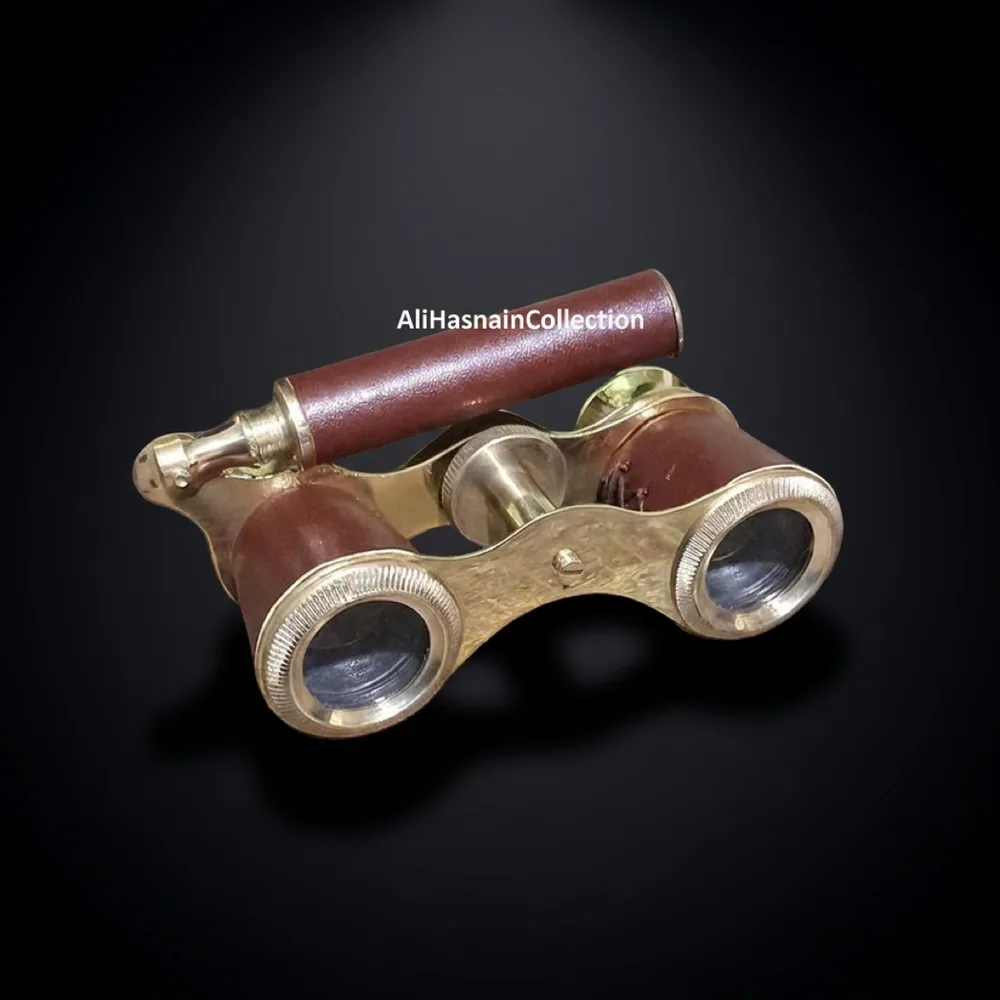
Catalogue reference: OperaX 3.3. Listed material: Brass.
Check the current product page and ask for model-specific dimensions, packaging and suitability before ordering.
Explore Antiqula’s opera glasses catalogue
Catalogue examples were checked against Antiqula’s product records on 2026-10-02. Research sources provide context; they do not certify the performance of individual catalogue products.