Choosing a Vintage-Style Telescope for a Gift or Display
A practical guide to handheld spyglasses and tripod telescopes, from eye-level placement to the questions worth asking before ordering.
Compare the interaction, footprint and presentation of a handheld spyglass and a supported telescope before choosing a format.
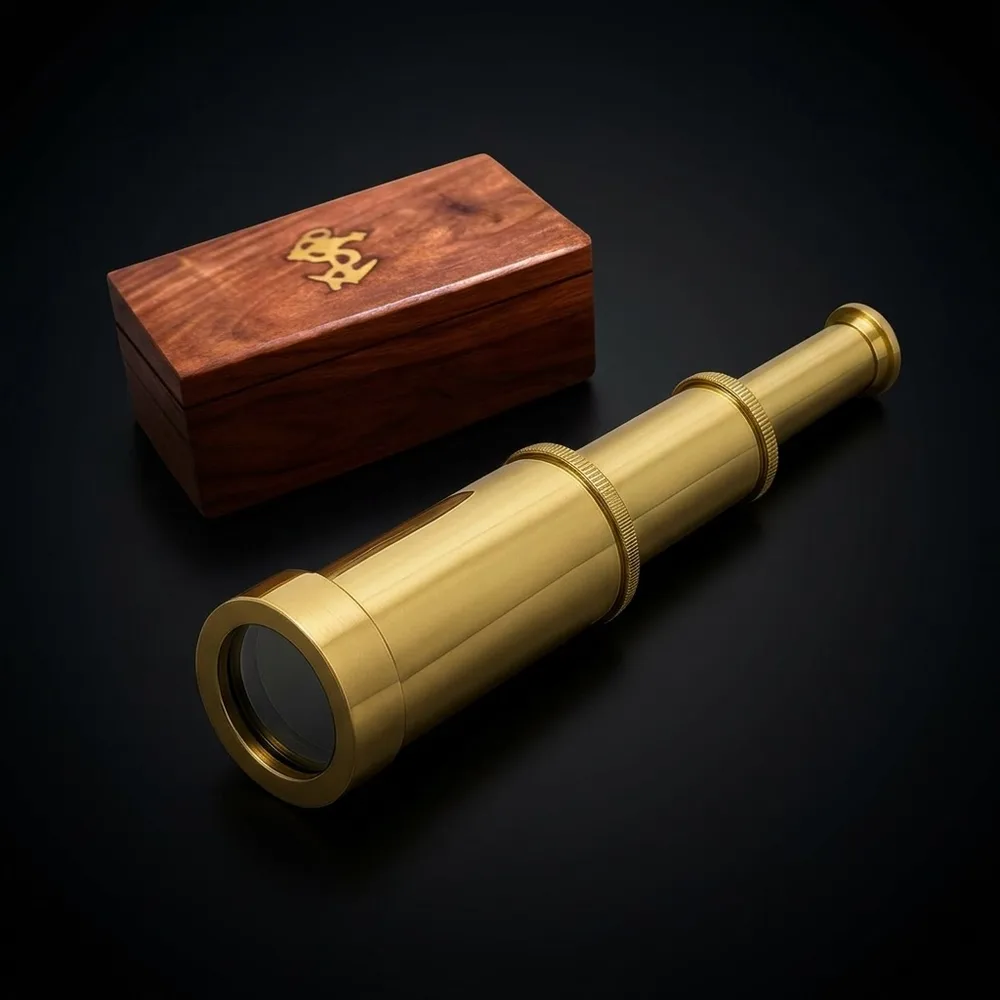
The useful question is not which telescope looks more impressive. It is how the object will be approached. A spyglass starts in the hand. A tripod telescope starts in a place. This difference affects storage, gift presentation, viewing comfort and the amount of room you need to reserve.
The two formats also invite different expectations. A small collapsible instrument suggests a personal object. A floor-standing telescope can resemble installed equipment, which may lead visitors to expect more from its optics. Explain the selected model’s verified features before letting its scale create an unsupported promise.
If someone wants to pick up an object occasionally, a handheld format is the simpler starting point. Ask whether it must be extended before focusing and how easily it returns to its closed form. Handling should feel deliberate rather than stiff or loose. A sample tells you more about that interaction than a photograph.
For a supported instrument, try the experience at the eyepiece. Is the height comfortable for its likely users? Does the support remain steady during adjustment? Can the telescope be repositioned without moving the whole stand? Request instructions for the exact model rather than assuming it behaves like a modern photographic tripod.
Neither format should be described as suitable for navigation, astronomy or professional observation merely because it resembles historical equipment. Those uses require their own documented capabilities. Keep aesthetic appeal and practical performance as separate parts of the comparison.
| Situation | Usually the more practical starting point | Check before deciding |
|---|---|---|
| Small desk with frequent handling | Handheld spyglass | Extended length and safe storage |
| Large study corner | Tripod telescope | Footprint, height and approach to eyepiece |
| Gift carried home after an event | Handheld spyglass | Case dimensions and transit protection |
| Interior with a defined sight line | Supported telescope | Tube direction and clearance around the stand |
A tripod occupies more than the triangle between its feet. The tube may project into a route through the room. A handheld object also needs more room when extended than when photographed closed. Measure both conditions and include clearance for fingers, open cases and adjustment.
A compact spyglass may be presented as one complete object in a case. The case then becomes part of the recipient’s ongoing storage. Look at its closure, lining and fit, and confirm that it is included for the chosen reference. Do not assume a case shown alongside one finish accompanies another.
A larger telescope may require assembly. The gift experience therefore includes unpacking a stand, finding fasteners and understanding the setup. Ask for an assembly sheet and the packed dimensions. For corporate gifting, this difference affects the delivery brief: a desk gift and a statement instrument need different space and handling arrangements.
For occasional viewing, choose a distant, ordinary daytime subject and ask for a demonstration of focusing. Observe whether a user can find the subject without extensive help. This is a practical selection exercise, not a laboratory assessment of optical quality. Record what was actually demonstrated and avoid translating it into broader claims.
Never use the Sun as a test subject. Keep the instrument away from direct solar viewing and request appropriate instructions. For a shop display, consider whether visitors can point the instrument freely or whether staff should supervise handling.
On a product comparison card, separate three lines: format, presentation and verified viewing information. The format might be handheld or tripod; presentation might describe the confirmed case or stand; viewing information should contain only model-specific details that have been established.
Choose a spyglass when the personal handling experience is central. Choose a tripod form when placement, stability and the visual line through a room are central. If both roles matter, inspect a sample of each in the intended location. That small exercise often resolves the choice more effectively than comparing finish names alone.
Catalogue reference: ExploreX 6.0. Listed material: Brass.
Check the current product page and ask for model-specific dimensions, packaging and suitability before ordering.
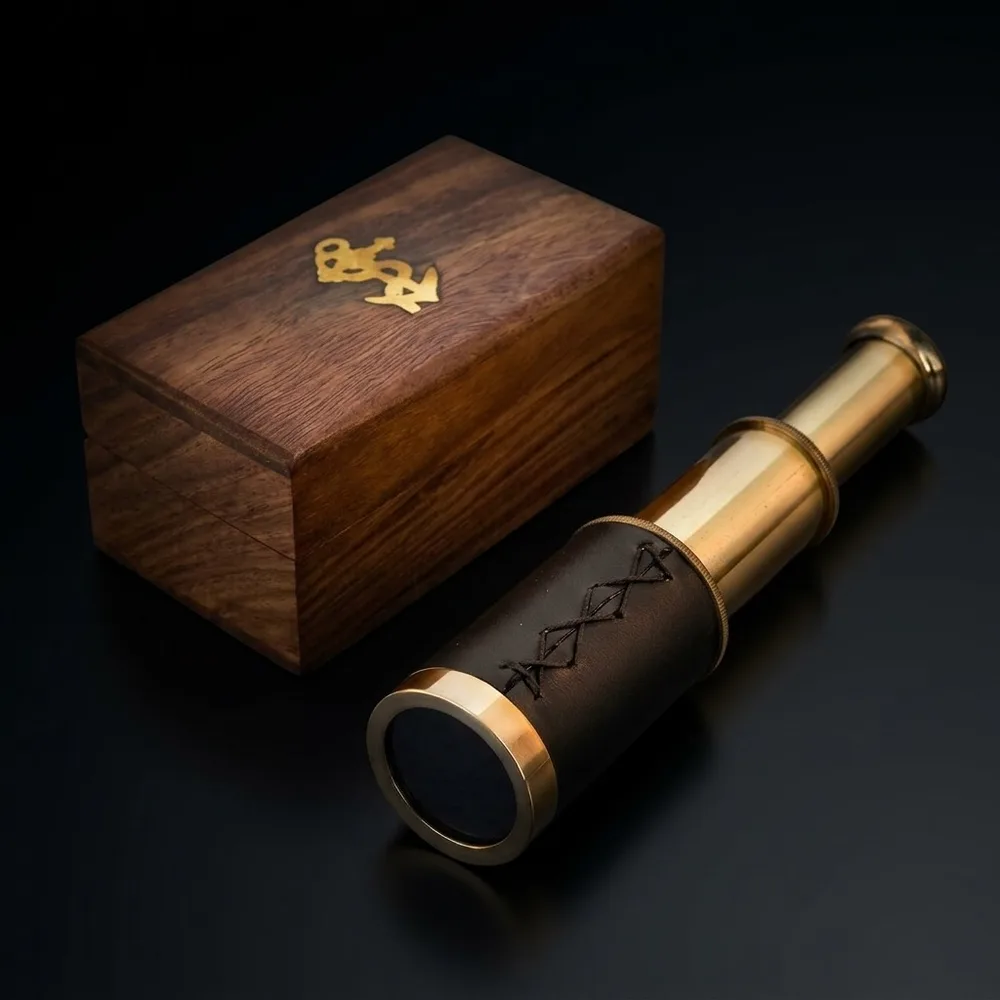
Catalogue reference: ExploreX 6.1. Listed material: Brass & Leather.
Check the current product page and ask for model-specific dimensions, packaging and suitability before ordering.
Explore Antiqula’s telescopes catalogue
Catalogue examples were checked against Antiqula’s product records on 2026-10-02. Research sources provide context; they do not certify the performance of individual catalogue products.