Choosing a Reproduction Sextant for Study or Display
Look at the frame, scale, moving parts and presentation before selecting a sextant-inspired object.
Use the frame, arc, arm and sighting arrangement as a guide to careful description rather than an assumption of navigational accuracy.
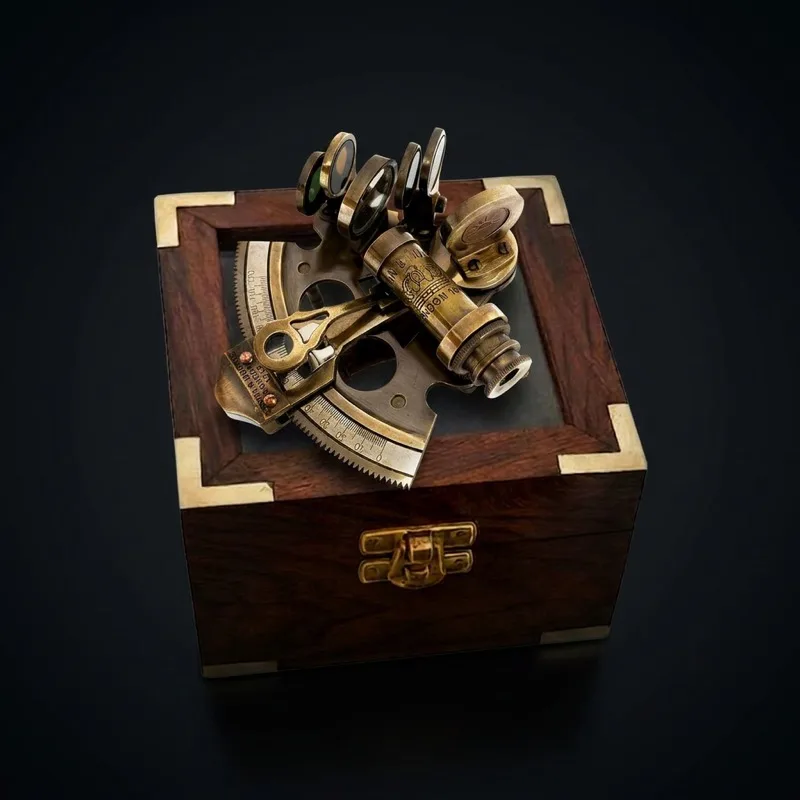
A sextant’s open frame can look complicated until its parts are considered in relation to one task: measuring an angle. Understanding that task helps a viewer appreciate the historical instrument. It also helps a buyer avoid mistaking a decorative reproduction for a verified measuring device.
The points below describe the general principle of a sextant. The exact arrangement varies, and not every reproduction includes a complete functional system. Match an explanation to the selected model rather than assuming all visible parts behave as they would on a professional instrument.
The frame supports the instrument’s components. The graduated arc provides a scale associated with angular readings. These features give a sextant much of its recognisable outline. On a display replica, they may be the most visible elements even from a distance.
Inspect the markings closely if the object will be used for teaching. Are they legible, and is their purpose explained? A neatly engraved arc can illustrate the idea of a scale without establishing measurement accuracy. Ask whether the scale is intended for actual readings and what documentation supports that use.
In the general sextant arrangement, an arm moves relative to the arc and participates in setting or reading the measured angle. Its movement needs to be considered alongside the rest of the system. A part that moves freely is not, on its own, evidence that the instrument is calibrated.
For a reproduction, ask which components may be moved and whether any parts are fixed for display. Avoid forcing a mechanism to behave like a historical instrument. If the object will be handled by visitors, establish the permitted movement before writing a demonstration routine.
Working sextants use an optical arrangement to bring directions of observation into a relationship that can be measured. Mirrors and sighting components therefore matter to the instrument’s operation, not merely its appearance. Their alignment cannot be judged reliably from a distant catalogue photograph.
Ask what the selected model is intended to demonstrate. If its role is decorative, a caption can identify the visible arrangement without promising dependable readings. If practical measurement is claimed, request operating instructions and model-specific information about adjustment and verification.
| Part or feature | Display question | Functional question |
|---|---|---|
| Frame | Is the shape clearly visible and supported? | Is the structure suitable for its stated use? |
| Arc markings | Can a viewer read and understand them? | Are they intended as a measurement scale? |
| Moving arm | May it be handled without damage? | How is movement and reading verified? |
| Sighting components | Are they present and clearly described? | What alignment and instructions are documented? |
| Case or stand | Does it support the object appropriately? | Does it protect the relevant components in storage? |
This checklist helps organise questions. It does not certify an instrument. A sample inspection by a retailer is different from professional calibration, and the resulting description should reflect that limit.
For an introductory display, explain that a sextant measures an angle and that historical navigation required additional information and calculations. Do not say that it automatically finds a position. Keep the explanation focused enough that a visitor can understand the instrument’s role without being given an incomplete navigation lesson.
Do not invite direct solar viewing through an unfamiliar reproduction. The presence of dark-looking components is not evidence of an appropriate protective filter. Historical descriptions of solar observations do not transfer safe operating capability to every replica.
A useful catalogue note can identify the frame style, markings, presentation and documented moving parts. It should also state that the item is a contemporary reproduction. Where operation has not been verified, use decorative or educational context carefully and avoid a professional-use claim.
The parts of a sextant make it an interesting object to study. Their presence should lead to better questions, not automatic assumptions. That approach supports a clearer display and a more responsible product explanation.
Catalogue reference: ArcX 4.0. Listed material: Brass.
Check the current product page and ask for model-specific dimensions, packaging and suitability before ordering.
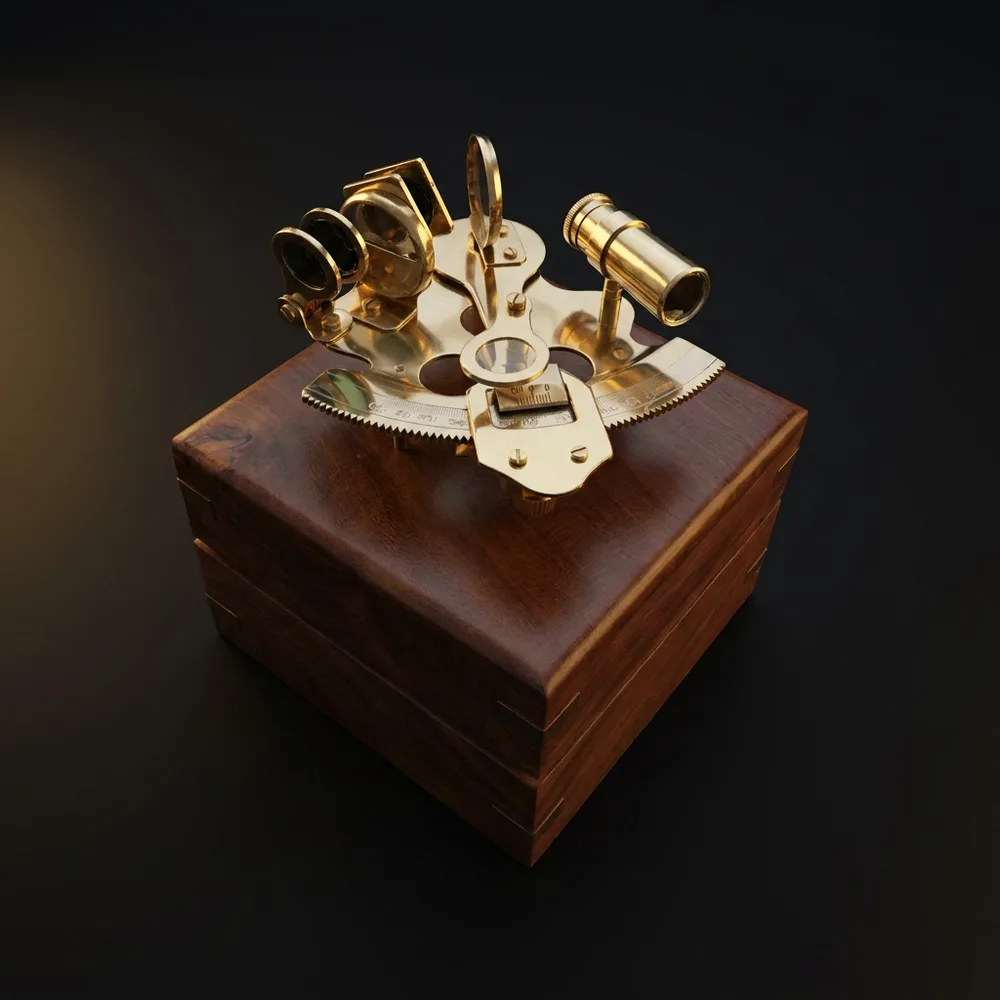
Catalogue reference: ArcX 4.1. Listed material: Brass.
Check the current product page and ask for model-specific dimensions, packaging and suitability before ordering.
Explore Antiqula’s sextants catalogue
Catalogue examples were checked against Antiqula’s product records on 2026-10-02. Research sources provide context; they do not certify the performance of individual catalogue products.