Armillary Sphere vs Orrery: Two Different Ways to Represent the Sky
Compare a ring-based celestial model with an orrery, and learn what each can communicate in a display or teaching setting.
Understand what an armillary sphere represents, how to compare its rings and base, and how to plan a stable, readable display.
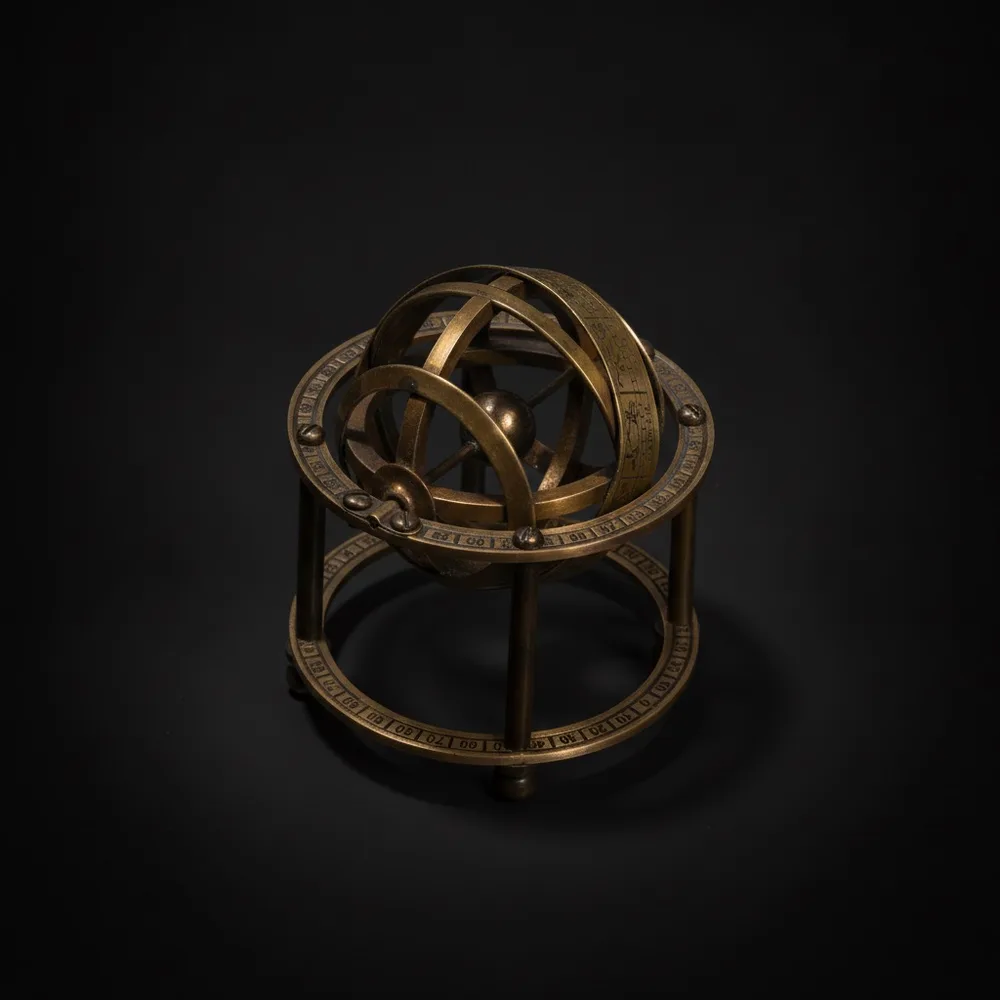
An armillary sphere turns an abstract idea—the geometry of the sky—into a set of visible circles. Its open framework can make it feel lighter and more legible than a solid globe, while its nested rings invite questions about the equator, horizon and apparent paths overhead. For a home, school, museum shop or gift range, the useful first question is not whether the object looks old. It is what kind of model it is and what a visitor should be able to understand from it.
The Antiqula category includes compact brass-coloured forms, versions on wooden bases and armillary globes that combine rings with a terrestrial sphere. Catalogue examples such as the Miniature Brass Armillary Sphere with Stand (celestx-4-0), the Rosewood Base model (celestx-5-0) and the Armillary Globe on MDF Base (celestx-5-3) illustrate different display vocabularies. Treat those as specific design examples; confirm dimensions, materials, movement and supplied components on the selected item page before ordering.
An armillary sphere is generally a framework of rings arranged around an axis. Depending on the design, the rings can represent circles used to describe the celestial coordinate system or the apparent sky. Historical examples vary: not every sphere contains the same rings, inscriptions or moving parts. A product photograph alone may not tell you whether the model is intended to demonstrate a particular coordinate system.
An armillary globe adds a terrestrial sphere inside or among those rings. That makes the object visually richer, but it combines two different reference ideas: a map of Earth and a framework associated with the heavens. Ask what the particular model’s globe and rings are intended to represent before writing a detailed educational label. A zodiac engraving, arrow or nautical finish may contribute to the design without proving that the object is an accurate working instrument.
An orrery, by comparison, models orbital relationships through bodies arranged around a central point, often with arms or gearing. Royal Museums Greenwich catalogs a distinct armillary sphere and a portable orrery whose fittings combine tellurium and planetarium functions. These specific examples show variety among historical models; they do not make the terms interchangeable names for every brass astronomical ornament. Describe what can be verified on the individual object.
| Design question | Why it matters | What to verify |
|---|---|---|
| Open sphere or globe within rings? | Determines whether the framework or map is the first thing the viewer reads | Exact model type and visible components |
| Separate plinth or ring resting directly on a surface? | Changes both stability and footprint | Base dimensions, overall height and support points |
| Plain rings, arrow or engraved decoration? | Sets the level of visual detail | Whether markings are legible and what they mean |
| Compact object or larger centerpiece? | Affects viewing distance and shelf position | Full assembled dimensions and weight if available |
A wooden base tends to create a visual boundary between the metal framework and furniture. It can also give a display a more grounded profile. A ring-footed or all-metal design may look more continuous and sculptural, but needs a level surface and enough clearance around projecting parts. Avoid assuming that a photograph’s camera angle shows the true footprint; request dimensions and, for a large order, a sample or measured product image.
Small armillary spheres can be appropriate for a desk, bedside table or glass cabinet, where a person can lean in to see the intersecting rings. A larger model may read from across a room, but only if its outlines remain distinct against the wall and surrounding objects. The display surface should support the full base without overhang. Leave enough room to remove the object safely for cleaning or inspection.
Think about the people who will encounter it. On a retail shelf, the object needs a stable position and a clear label that explains the difference between a sphere and an armillary globe. In a school or interpretation setting, a simple diagram alongside the object may communicate the geometry better than extra decorative props. At home, choose a place where overhead light does not create a distracting pattern of reflections across polished rings.
Before placing an armillary near a window, consider sun exposure as well as appearance. Direct light can heat a small display, fade nearby material and make metal surfaces uncomfortable to touch. A windowsill is not automatically the best astronomy-themed location. A shelf with even indirect light often makes the outline easier to read.
Some armillary designs have rings that can be moved; others are fixed or have only selected movable parts. The presence of joints does not establish that an object is calibrated or suitable for celestial observation. If a school intends to use a model for demonstration, ask which parts may move, whether an instruction sheet is supplied and what concepts the manufacturer says it represents. Then test the demonstration with the actual unit and prepare a simple explanation.
For a display or gift, movement may simply add a tactile dimension. In that case, handling still needs boundaries: visitors should know where to hold the object, and a display should not invite them to pull on thin rings or an arrow. If the product page does not state whether parts rotate, do not infer it from an image or from the category name.
A concise caption can identify the object as an armillary sphere or armillary globe, describe verified materials and point to one visible feature. If you discuss historical instruments, distinguish the context of a museum object from a modern reproduction. Royal Museums Greenwich records are useful for studying specific collection examples, but a collection object does not authenticate a visually similar retail model.
Avoid a claim such as “maps the planets” unless the selected model demonstrably does so. A framework with rings may represent circles on a celestial sphere without showing planetary orbits. Likewise, “navigation instrument” needs evidence about the specific object and its intended operation. You can offer meaningful context without promising measurement or navigational function.
The open structure has narrow surfaces and intersections where dust can collect. Use a soft, clean brush or cloth only as appropriate to the supplied finish. Do not polish a brass-coloured surface simply because it looks aged: the colour may be deliberate, and abrasive polishing can remove surface detail. Request finish-specific care guidance from the supplier. If parts move, do not force a joint that feels tight.
For boxed stock, check that the packaging supports the base and does not press on the rings. Keep small models away from edges where a sleeve, book or passing hand could catch the framework. Photograph the product from several angles so a buyer can understand both its silhouette and footprint, and make clear which accessories are actually included.
Record the model name and reference, the sphere or globe format, overall dimensions, base type, verified materials, moving parts and intended setting. Add a separate line for any educational or functional claim and the evidence behind it. For wholesale enquiries, include the quantity and destination with the reference list, then ask for current availability and terms directly rather than relying on a general promise.
An armillary sphere works best when its rings can be seen clearly and its meaning is described with care. Compare the object’s geometry, base and scale first; let its finish support the story rather than stand in for historical provenance or tested function.
Catalogue reference: CelestX 4.0. Listed material: Solid Brass.
Check the current product page and ask for model-specific dimensions, packaging and suitability before ordering.
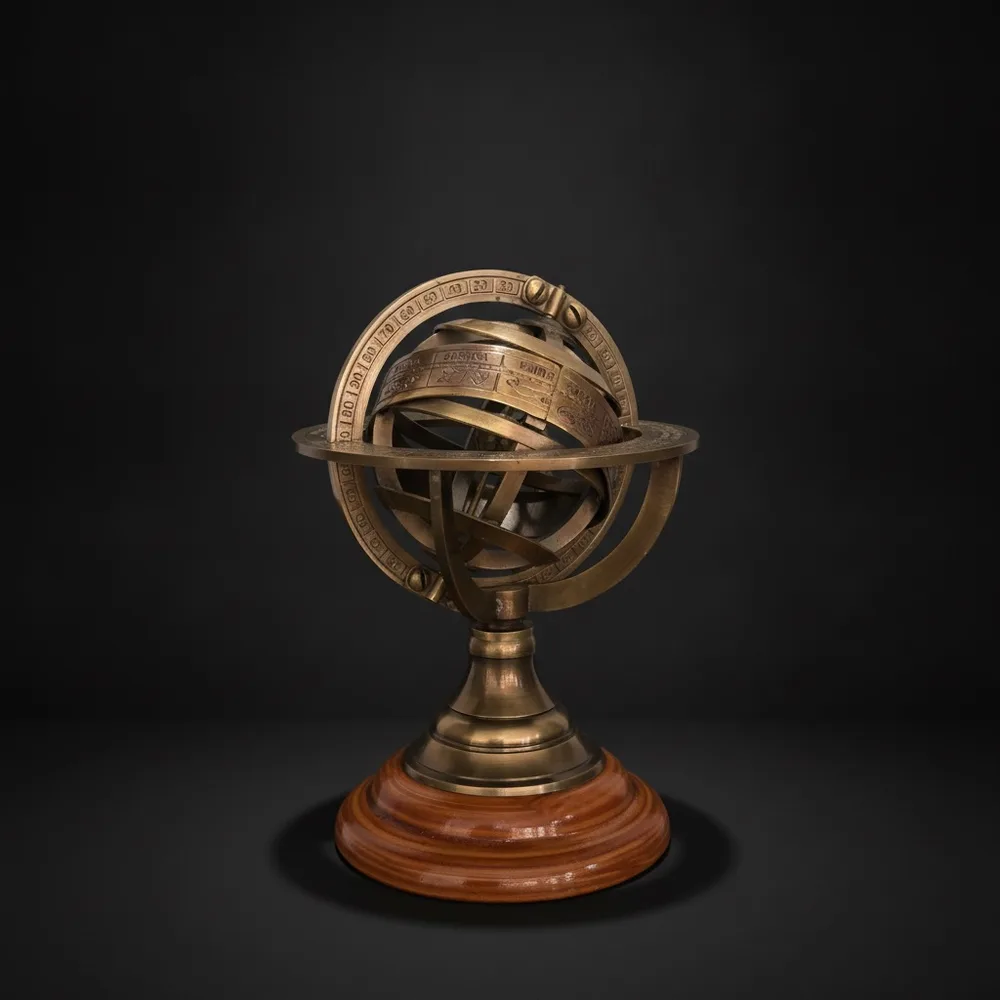
Catalogue reference: CelestX 5.0. Listed material: Solid Brass.
Check the current product page and ask for model-specific dimensions, packaging and suitability before ordering.
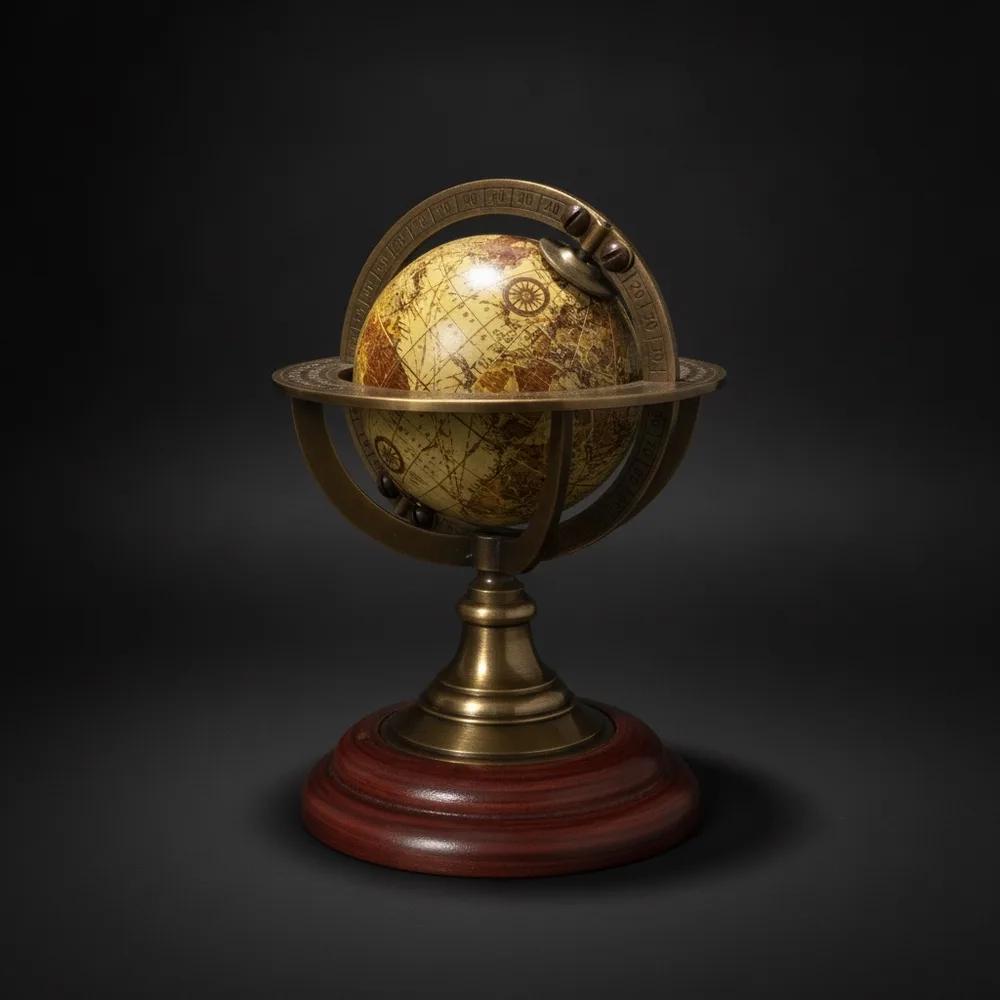
Catalogue reference: CelestX 5.3. Listed material: Solid Brass.
Check the current product page and ask for model-specific dimensions, packaging and suitability before ordering.
Explore Antiqula’s armillary sphere catalogue
Catalogue examples were checked against Antiqula’s product records on 2026-10-02. Research sources provide context; they do not certify the performance of individual catalogue products.