Classic, Personalised and Heritage Compasses: Building a Gift Assortment
Give each compass a distinct gift role instead of filling a shelf with minor finish variations.
Compare compass form, dial, case and display, and understand why a moving needle alone does not establish navigation accuracy.
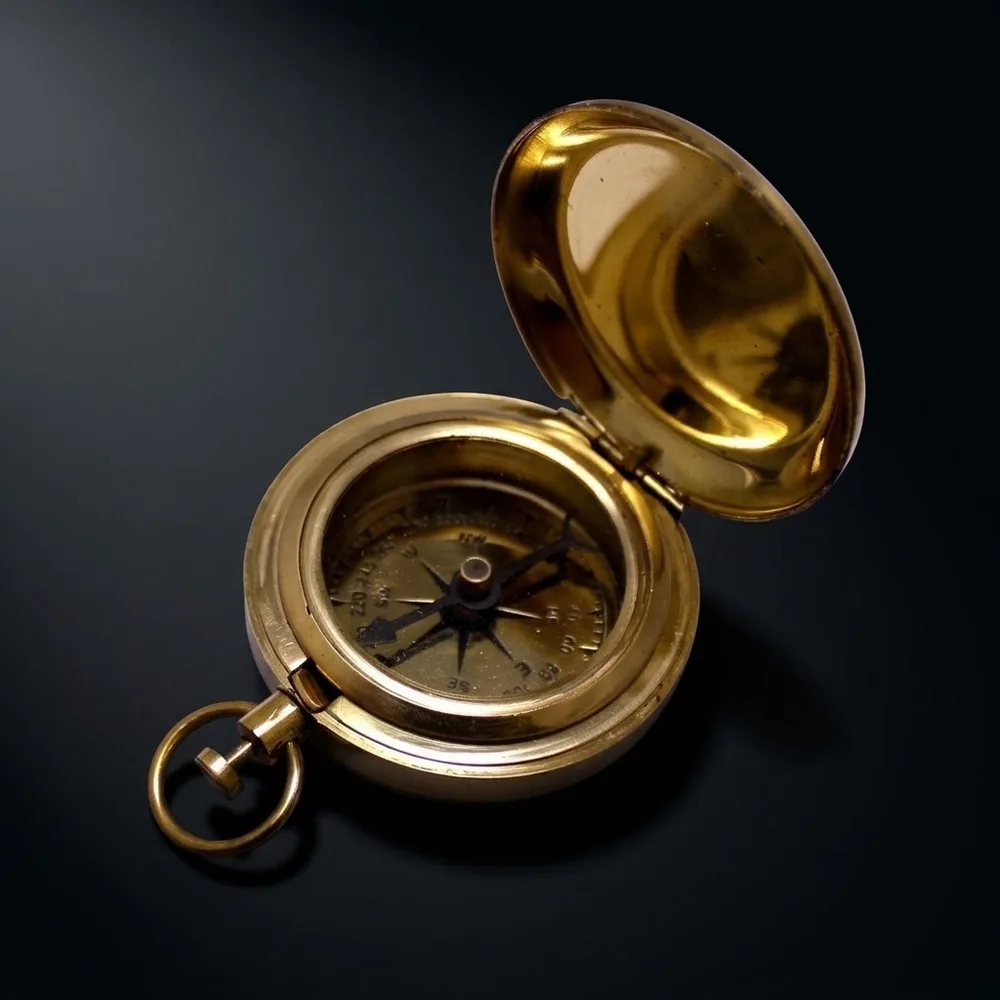
Compasses range from simple pocket forms to decorative desk pieces, with cases, inscriptions and finishes changing the way each object is handled and presented. A buyer may be choosing for a gift, a study display or practical direction finding. Those purposes call for different questions. A polished brass surface or a moving needle can make an object feel instrument-like, but neither establishes that a specific model is accurate for navigation.
Antiqula’s catalogue shows how the details vary by reference: navx-1 is a push-button polished brass compass listed without a case, while navx-2 and navx-3 pair message designs with leather cases. Check the live record for the exact wording and package. Use the following guide to assess the form first, the dial second, and the intended use before ordering.
For a decorative display, start with the lid, profile, finish and storage. Ask whether the case or box is included, whether the compass sits securely when opened, and whether the dial can be seen without handling the piece. For a gift, consider if the inscription and case fit the occasion and whether the recipient can store the object safely.
For actual direction finding, ask the supplier for model-specific operating instructions, performance information and intended-use guidance. The National Centers for Environmental Information explains that a magnetic compass responds to the local magnetic field; magnetic declination—the difference between magnetic and true north—varies with location and time. Nearby magnetic sources can also affect a reading. A desk demonstration that the needle moves is not a field test, and it does not make a gift compass safety equipment.
If the intended use is practical navigation, do not substitute decorative appearance for a tested compass with appropriate instructions. Where details are not documented for the chosen item, describe it as a compass-inspired gift or display object rather than promising outdoor accuracy.
A lid protects the dial when closed and becomes part of the visual experience when open. Check the hinge or push-button action on a sample if possible. Does the lid stay open? Can the user close it without pressing the needle or forcing a small catch? A leather case changes storage and portability; a bare compass may be easier to place on a desk but more exposed to scratches.
Read the face rather than judging the object from the lid. Look at the orientation of the markings, needle visibility and contrast. Is the dial readable in ordinary room light? Is it fixed under a clear cover? Does the needle settle, or does it keep moving when the object is still? These checks help you describe what a buyer can actually see, but they do not prove a bearing measurement is correct.
| Feature | What to inspect | What to confirm |
|---|---|---|
| Lid or push-button | Opening action, hinge and how it rests | Whether the control should be pressed or lifted |
| Dial | Markings, contrast and needle visibility | Whether markings are functional or decorative |
| Case | Fit, lining and closure | Whether the case is part of this reference |
| Inscription | Exact text and placement | Whether it is stock or can be customised |
| Intended use | Display, gifting or direction finding | Written product-specific performance and instructions |
A message can make a compass more personal, but text must be checked on the exact model. Read names, punctuation and attribution carefully. A quotation credited to a writer should be verified before it is printed in new marketing material. Do not assume an inscription can be replaced or that a custom option shown for one reference is available across the entire category.
If a buyer requests custom work, confirm the process with the supplier: available area, method, proof, production lead time and minimum order conditions. Keep the approved artwork tied to the product ID and retain a final proof. A photograph of one finished example does not promise the same wording or layout on a different compass.
Small compasses can invite close handling. Place a sample on a stable tray and keep a closed product or package nearby to show how it is stored. Avoid placing it beside strong magnets, speakers or metal objects if visitors are expected to observe the needle. Do not hang an opened model where it can fall or be bumped.
Use a caption that describes the material, finish, case and message confirmed for the specific reference. If a design has an aged appearance, call it an antique-style finish unless the product has documented age and provenance. Historical styling is a visual cue, not a record of ownership or use by an explorer.
For care, the Canadian Conservation Institute distinguishes cleaning from polishing and warns that polishing removes metal. Use gentle dusting and ask for finish-specific instructions before applying a metal cleaner. An intentional patina or coating should not be brightened simply to match another object on the shelf.
A simple dial may suit a buyer who values the object’s form; a message design may be more appropriate for a milestone gift; a leather case may matter to someone who wants a contained presentation. These are useful questions, not guaranteed customer preferences. Let the intended recipient and use guide the choice instead of ranking pieces with vague labels such as premium or authentic.
For a wholesale shortlist, record the reference, dimensions, dial visibility, opening method, inscription, case contents, finish and intended use. Mark unknown performance details for follow-up. Ask for a sample if handling or display is important, and request current availability and terms directly. A thoughtful compass purchase comes from understanding how the selected object looks, opens and is meant to be used.
Catalogue reference: PureX 001. Listed material: Brass.
Check the current product page and ask for model-specific dimensions, packaging and suitability before ordering.
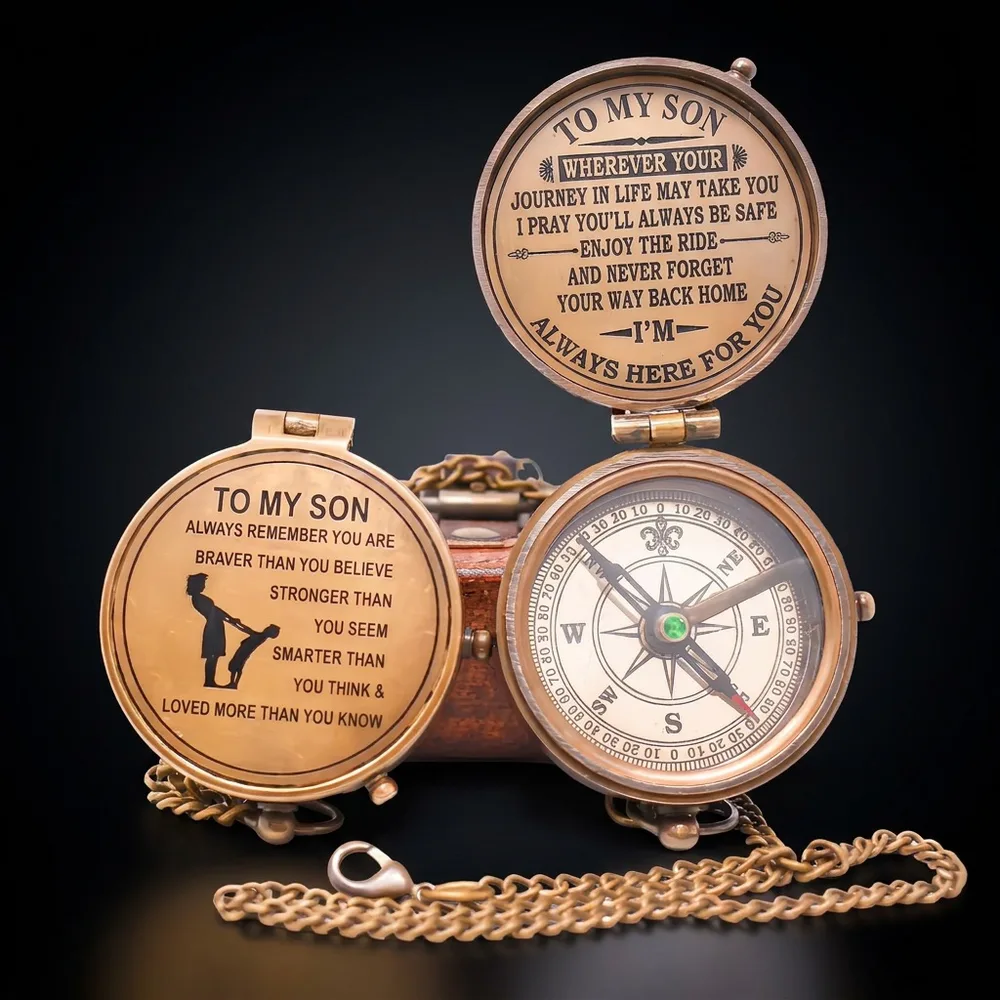
Catalogue reference: PulseX 001. Listed material: Brass.
Check the current product page and ask for model-specific dimensions, packaging and suitability before ordering.
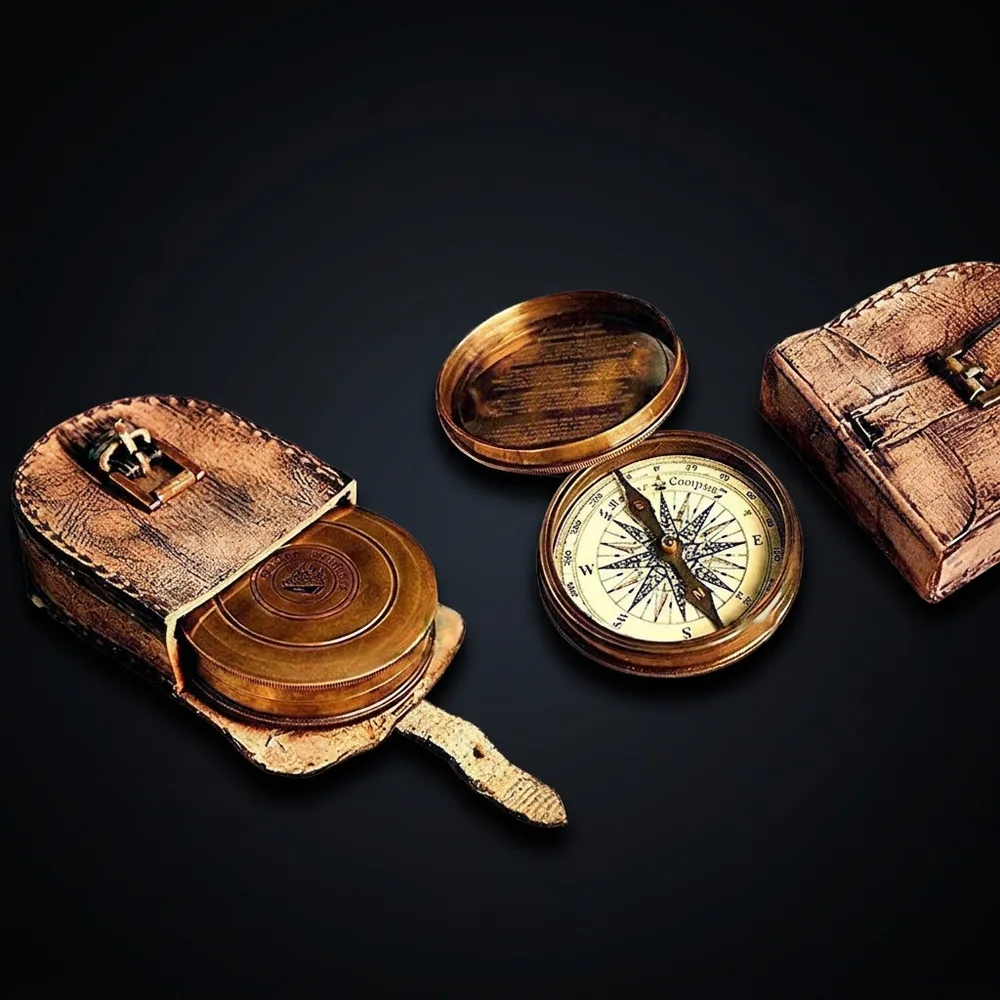
Catalogue reference: PulseX 002. Listed material: Brass.
Check the current product page and ask for model-specific dimensions, packaging and suitability before ordering.
Explore Antiqula’s compasses catalogue
Catalogue examples were checked against Antiqula’s product records on 2026-10-02. Research sources provide context; they do not certify the performance of individual catalogue products.