Desk Globe vs Floor Globe: Size, Stand and Placement
Measure a globe’s full footprint, compare desk and floor stands, and plan a location where the map can be seen and safely approached.
Choose a vintage-style globe by map legibility, scale, stand, placement and the needs of its intended reader.
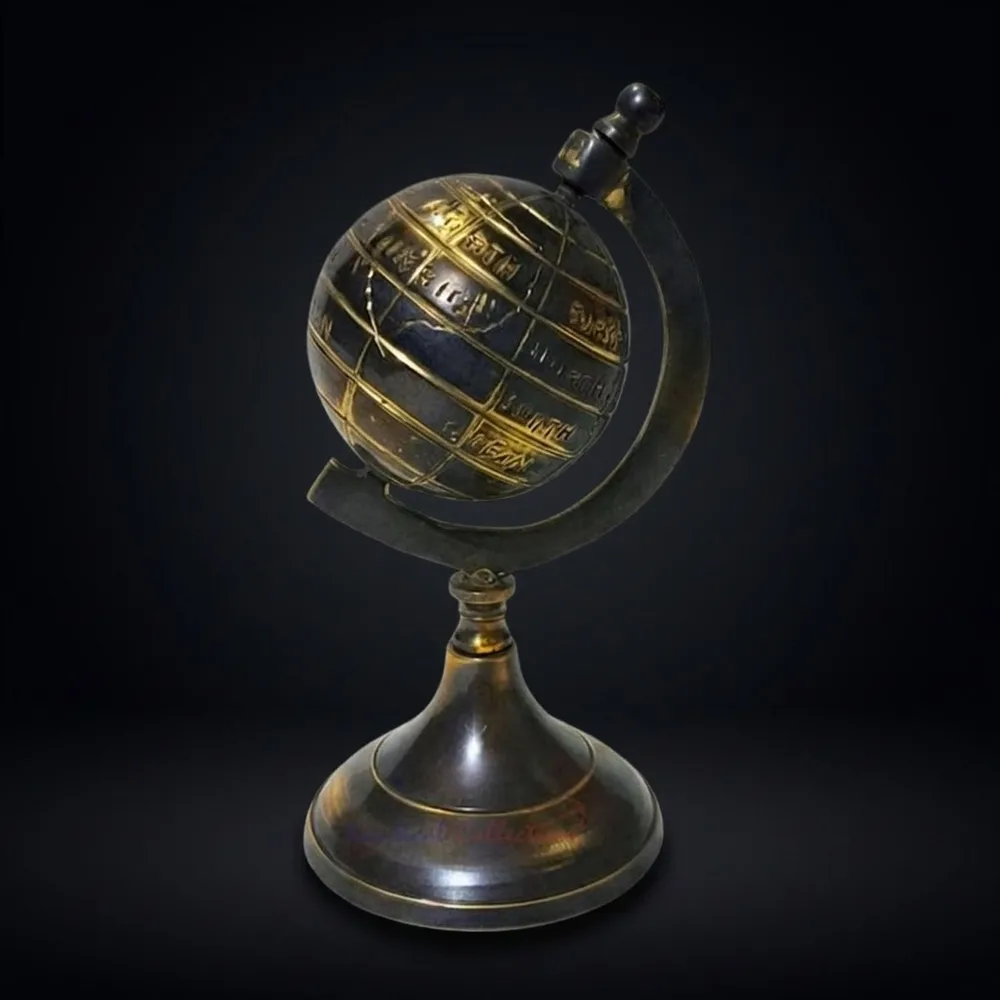
A globe is more than a round decorative object: its map encodes ideas about place, scale and the world. Choosing a vintage-style globe means balancing those ideas with size, stand, visibility and the room where the piece will live. A small desk model invites close inspection; a floor globe occupies space and becomes part of the room’s architecture. Before choosing a finish, decide whether the object is meant to be read, handled, gifted or simply noticed.
Antiqula’s catalogue includes compact desk examples such as the Small Brass Desk Globe with Dark Antique Finish (atlasx-6-7-0), a larger globe on a three-legged brass stand (atlasx-8-3-0) and full-height tripod presentations such as the Large Dark Globe on Wooden Tripod Stand with Brass Ring (geox-18-1-0). These titles identify useful differences, but verify the current listing for dimensions, map, material and assembly details.
The globe’s surface determines whether it works as a reference object or primarily as decor. Look at labels, contrast and legibility at the expected viewing distance. A dark ocean and gold land palette may create a dramatic silhouette, while a lighter map can make labels easier to find under dim room lighting. Neither appearance automatically indicates educational accuracy.
Check the map’s publication or revision details if currency matters. Borders and place names change over time, and vintage styling does not establish the map’s date. A product that is intended as a decorative object should not be described as a current reference map without confirmation. Likewise, a replica finish does not authenticate an old cartographic design.
Royal Museums Greenwich’s terrestrial globe collection record shows how a museum describes a specific globe as an object with its own history and construction. Its Maps, Charts and Globes school session asks what such sources can tell us and how navigation has changed. Those are useful prompts for interpreting a globe, but a modern retail example must be assessed from its own map and product documentation.
A globe places geographic information on a curved surface. Unlike a flat map, it does not have to flatten the whole world onto a plane, but its small scale still requires selection and simplification. Read the labels closely and look for a legend, scale, meridians, parallels and a stated map date. If the globe will be used to look up current country names or borders, confirm the map’s revision rather than trusting its vintage palette.
Terrestrial globes show Earth; celestial globes represent the sky from a particular convention or viewpoint. A globe with bright metallic land, black ocean or gemstone detail may be designed primarily as a decorative piece. The colours and materials are not a guarantee that its place names are current, complete or easy to read. Ask for a close image of the actual map surface if legibility matters.
A meridian ring, equator line and degree markings may help orient a globe, but their presence alone does not show that they are calibrated or movable. Identify what is visible in the product record before explaining it. If a sphere turns, test how it moves gently and check whether its map remains clear from the viewer’s angle. If it is fixed, do not invite people to rotate it.
Royal Museums Greenwich’s Maps, Charts and Globes school session explores how such sources can tell stories and how navigation has changed. That is a useful interpretive frame: ask when a map was made, who made it and what its labels include or leave out. A historic-looking design should not be described as a period map unless its date and source are documented.
In a classroom or library, prioritize contrast and readable labels at the distance of the group. A dark map with fine gold lettering may photograph dramatically yet be difficult to read in a dim room. A close-view desk globe can invite an individual to trace routes or compare locations; a large model can help a group share the same view. Check the actual product at the intended distance, and supplement it with a current map when accuracy is part of the lesson.
For a home or retail display, the globe can be primarily sculptural, but make that role clear. Use the palette to create contrast with its surroundings, and avoid staging several ornate globes so closely that their rings and labels merge. A photograph should show the map face and stand; an attractive angle alone may hide whether text is legible. Confirm product dimensions and placement separately before ordering a floor or desk format.
Once the map suits its purpose, confirm the assembled dimensions, stand, required clearance and package instructions for the selected model. These details determine whether a reader can get close enough to see the names and whether a group can share the view. The accompanying desk-versus-floor guide covers the measuring and room-layout questions in more depth; this guide focuses on the map and what it communicates.
The phrase “vintage globe” can refer to styling rather than age. Use “vintage-style” when the product is a contemporary reproduction and no verified production date is supplied. If the map itself imitates an earlier cartographic look, distinguish that aesthetic from a historically accurate map. Do not call a globe antique or attribute it to an era on the basis of a patina or colour palette.
If a map uses historical borders, explain their date only when the source or product documentation supports it. Old maps can reflect the assumptions and omissions of their makers, so they are valuable as historical evidence but not neutral snapshots of timeless geography. A careful caption can invite the viewer to ask when, where and for whom a map was made.
For each model, record the reference, map date if stated, place-name language, label readability, visible grid, stand and confirmed movement. Note whether the intended role is current reference, historical interpretation or decorative display. Confirm the assembled dimensions and package separately, then ask the supplier about any unverified detail before making a wholesale shortlist.
The right globe is the one whose map, scale and stand suit the way it will be encountered. Decide whether readers need to study its surface or notice it from across a room, then confirm the dimensions and construction that make that experience possible.
Catalogue reference: AtlasX 2.5.0.
Check the current product page and ask for model-specific dimensions, packaging and suitability before ordering.
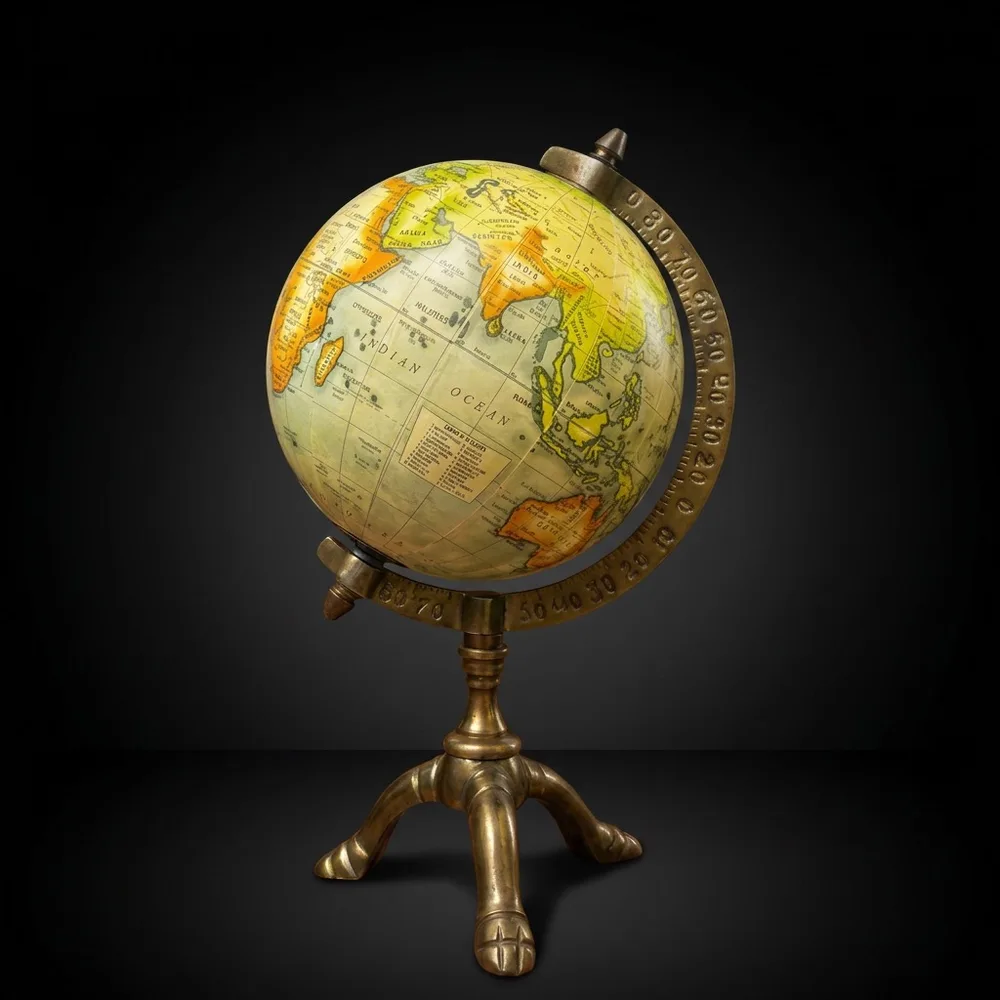
Catalogue reference: AtlasX 8.2.
Check the current product page and ask for model-specific dimensions, packaging and suitability before ordering.
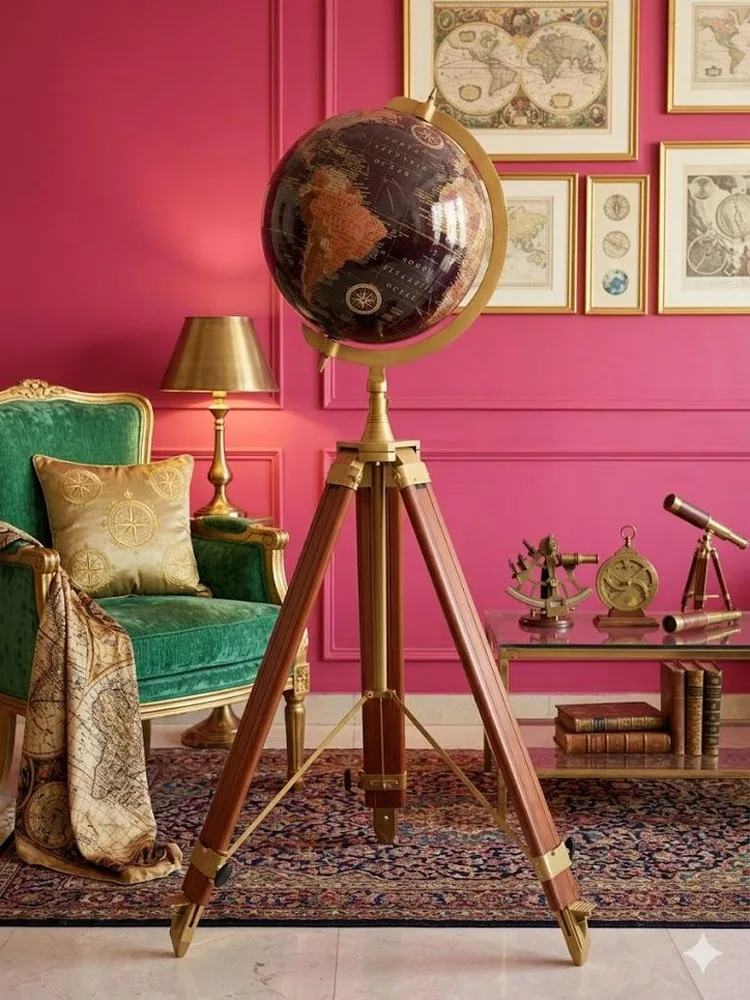
Catalogue reference: GeoX 18.3.
Check the current product page and ask for model-specific dimensions, packaging and suitability before ordering.
Explore Antiqula’s vintage globes catalogue
Catalogue examples were checked against Antiqula’s product records on 2026-10-02. Research sources provide context; they do not certify the performance of individual catalogue products.